
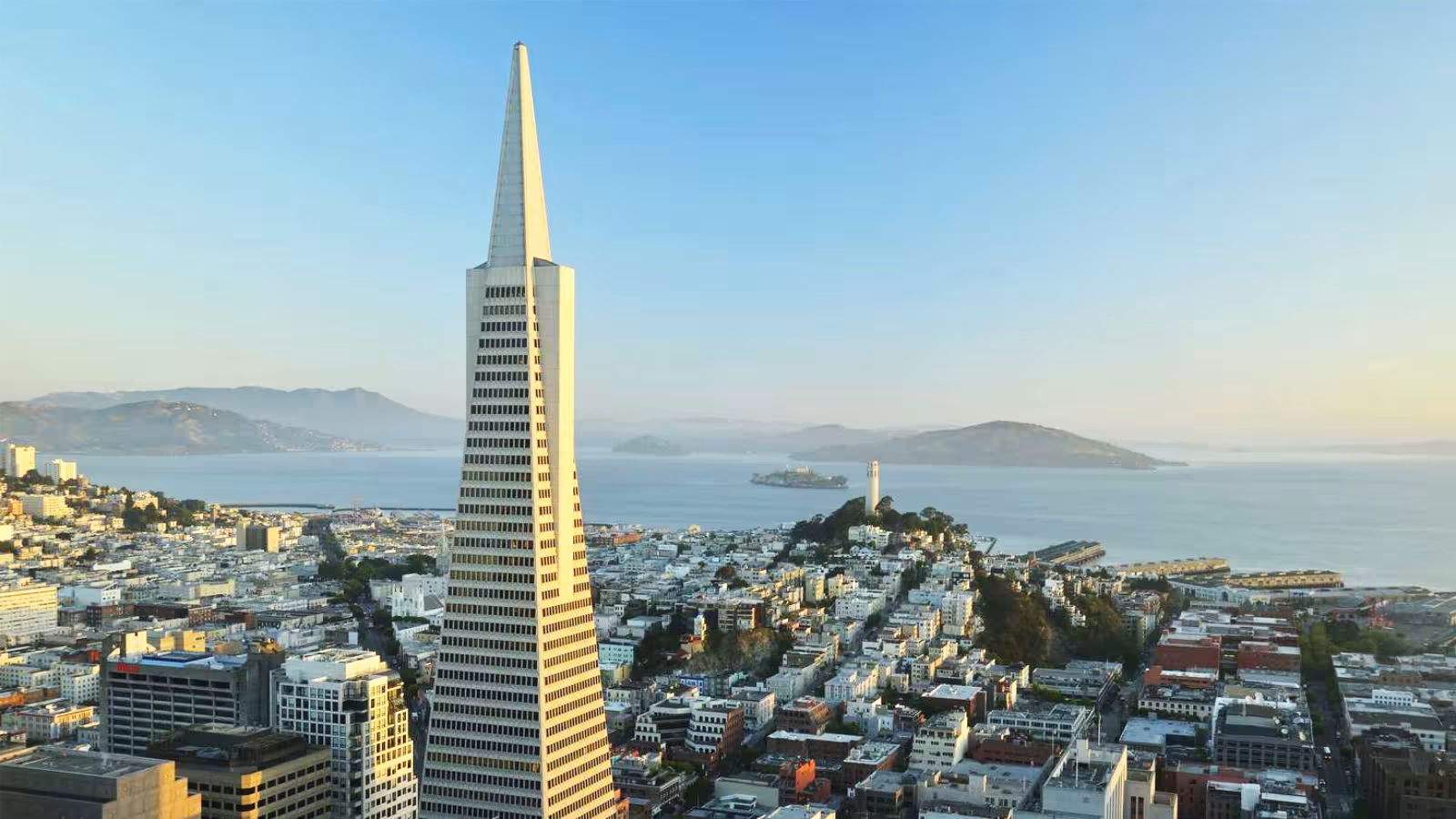
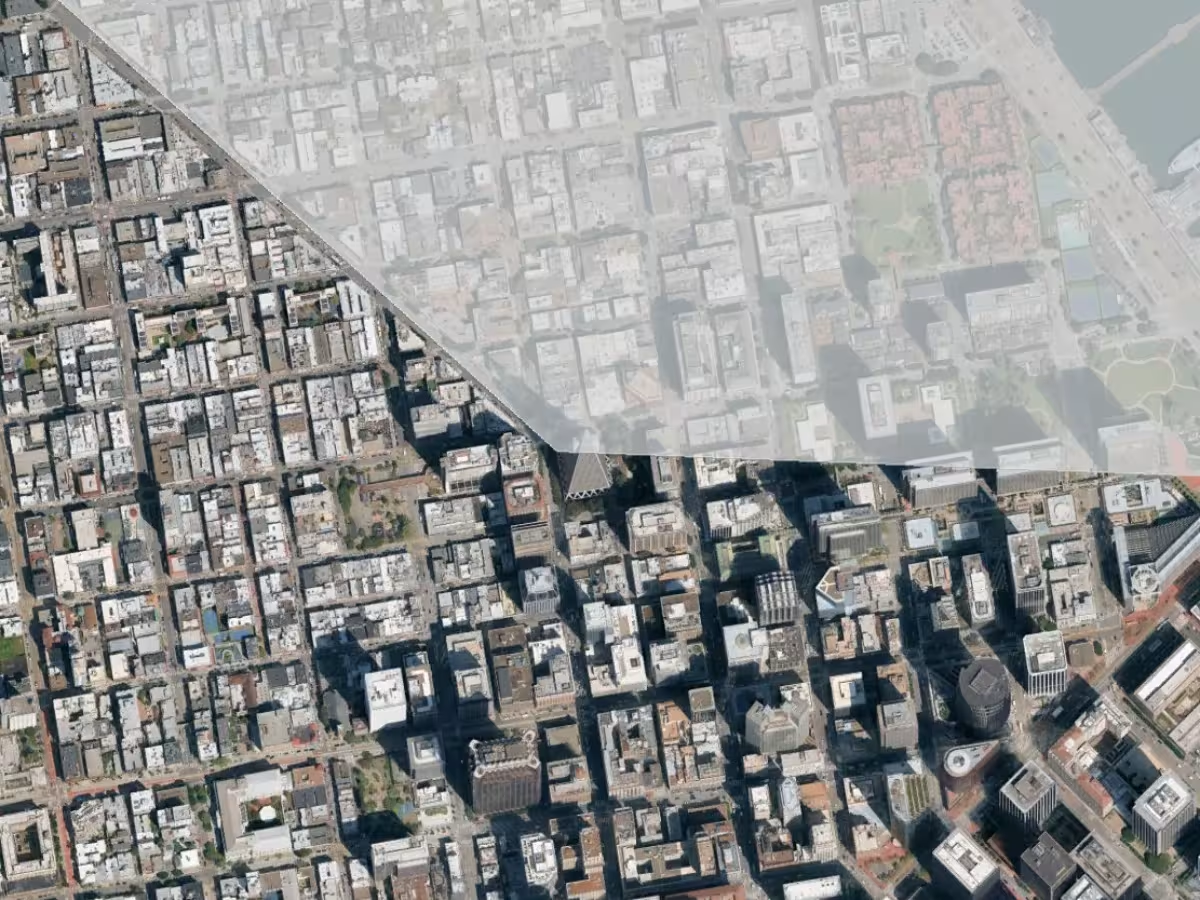
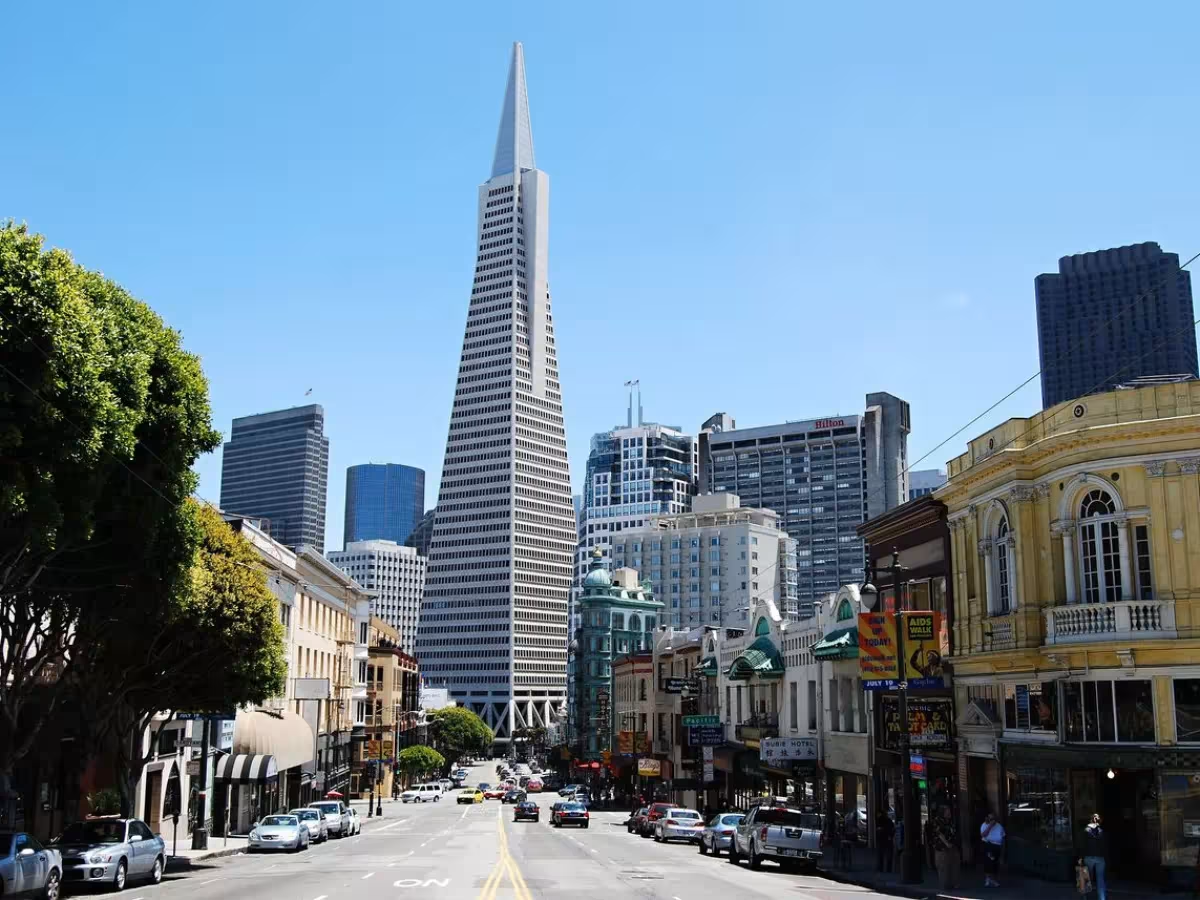
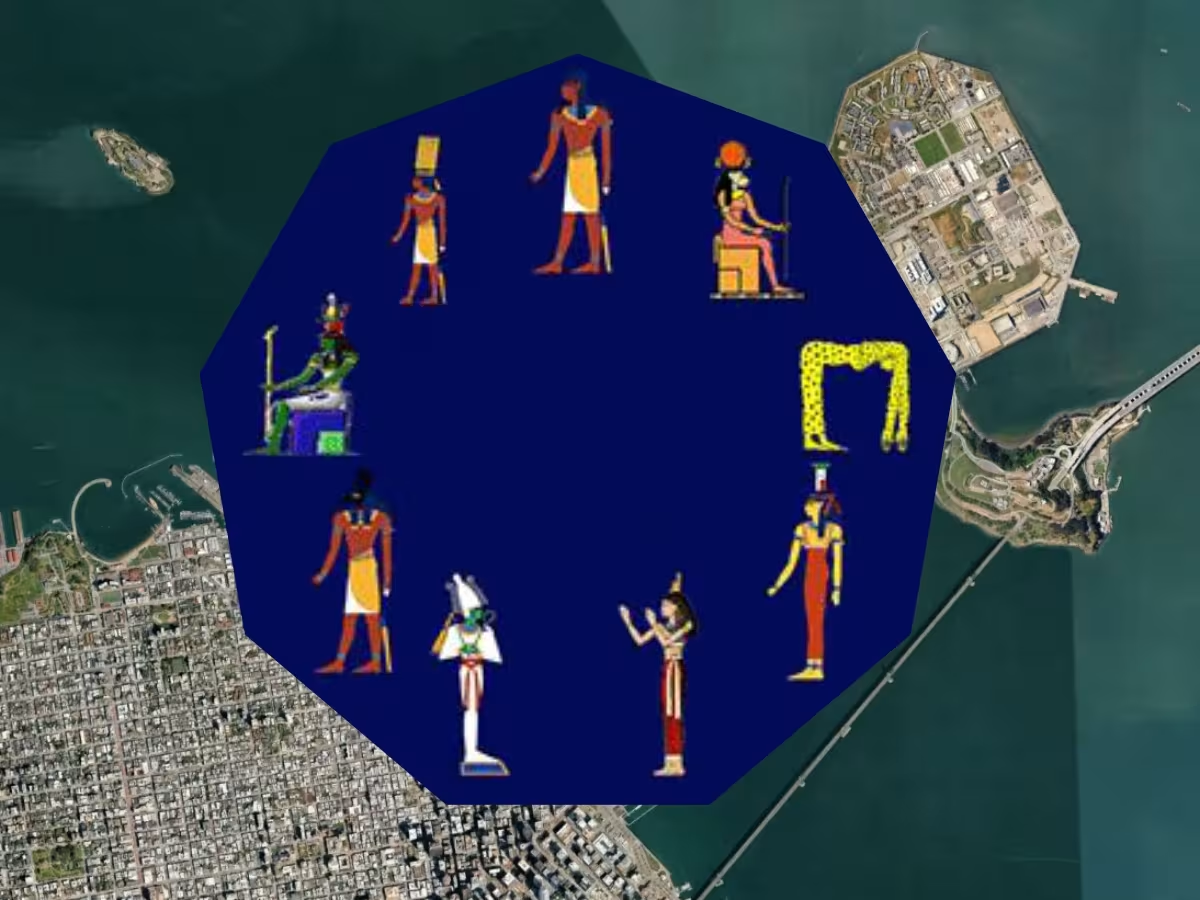
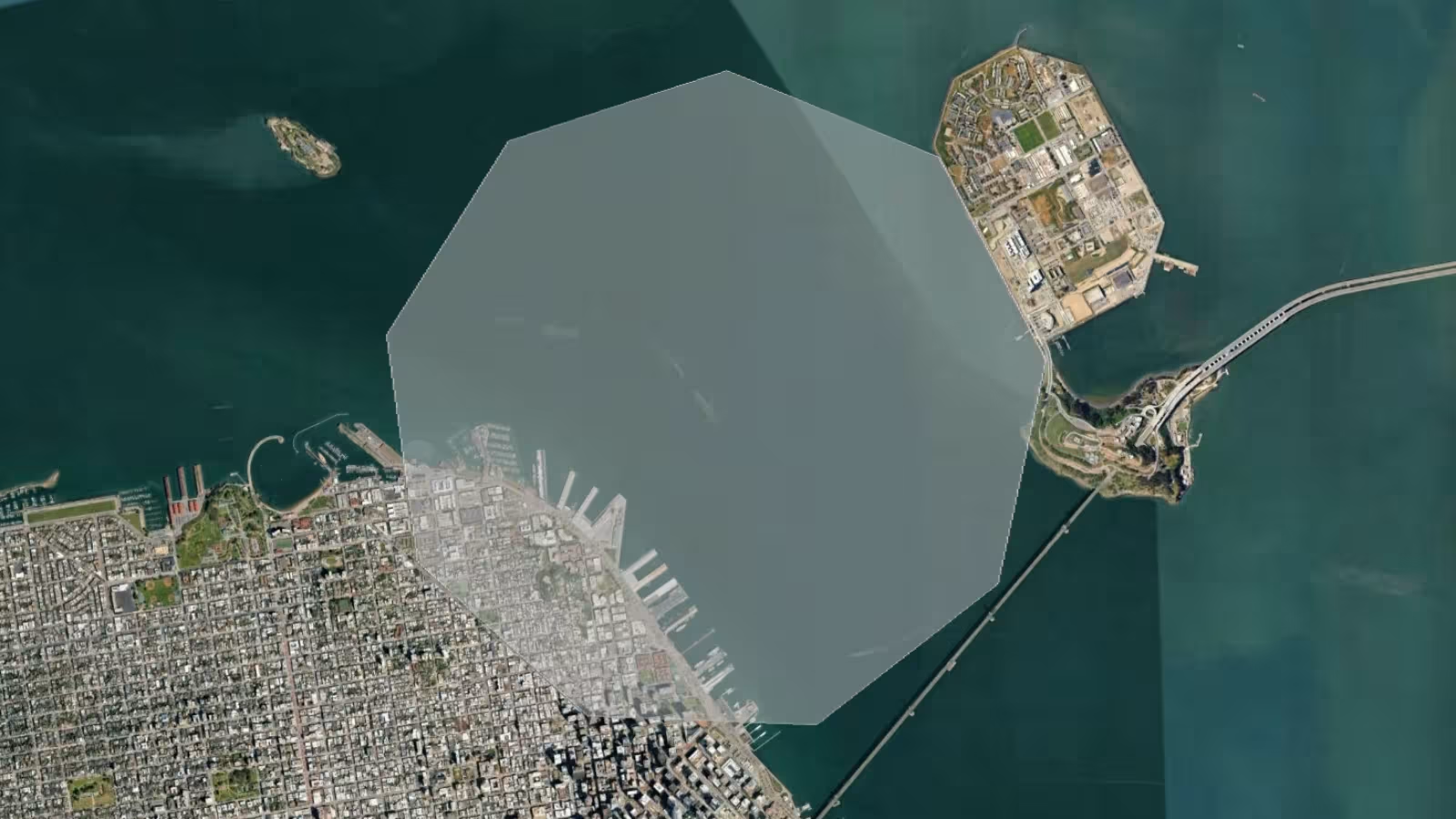
Seen from satellite, the streets and islands of San Francisco Bay form an enneagon whose highest point is the Transamerica Pyramid, the city’s most iconic skyscraper. Canadian author Scott Onstott, who made this discovery, associates this geometric shape with the Egyptian Ennead and its nine deities. By a curious coincidence, San Francisco is also known as a center for the dissemination of the Enneagram, one of the many self-development techniques that emerged in California during the 1970s. This article will first examine the configuration of the city of San Francisco and then explore its symbolism.
The Master Plan
The 40-degree angle formed by Columbus Avenue and the adjacent streets resulted from the planning of a rapidly growing city, under the direction of the Freemason surveyor Jasper O’Farrell, between 1847 and 1870.
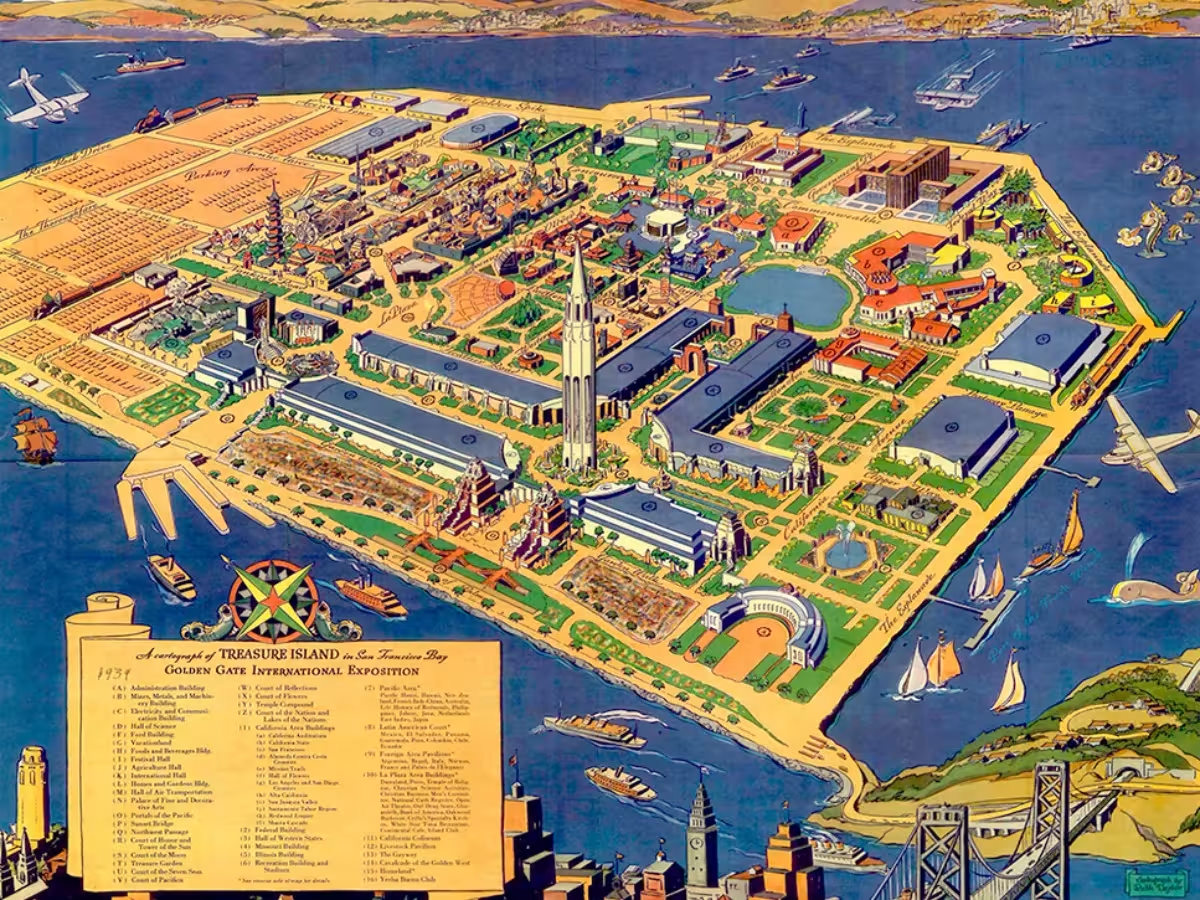
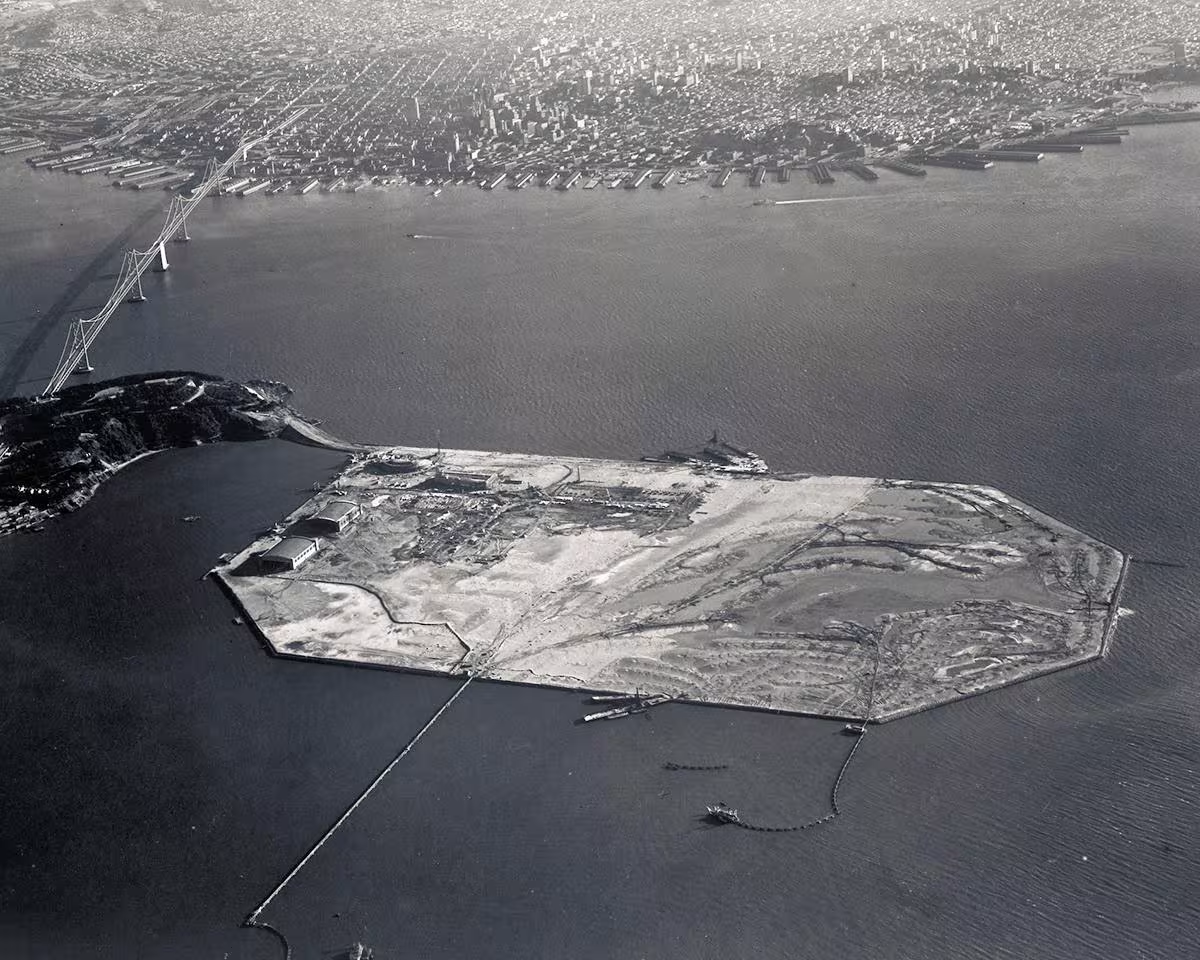
The enneagon discovered by Scott Onstott aligns not only with the street grid of the old town but also with that of Treasure Island, an artificial island whose construction began in 1936 to host an international exposition and a future airfield. However, no source makes it possible to determine why the engineers of the time would have insisted on filling in the San Francisco Bay with an orientation conducive to creating a geometric figure visible only from very high altitude. Could it be to complete a grand Masonic design whose scale eludes us? One thing is certain: there is continuity with the master plan established by O’Farrell.
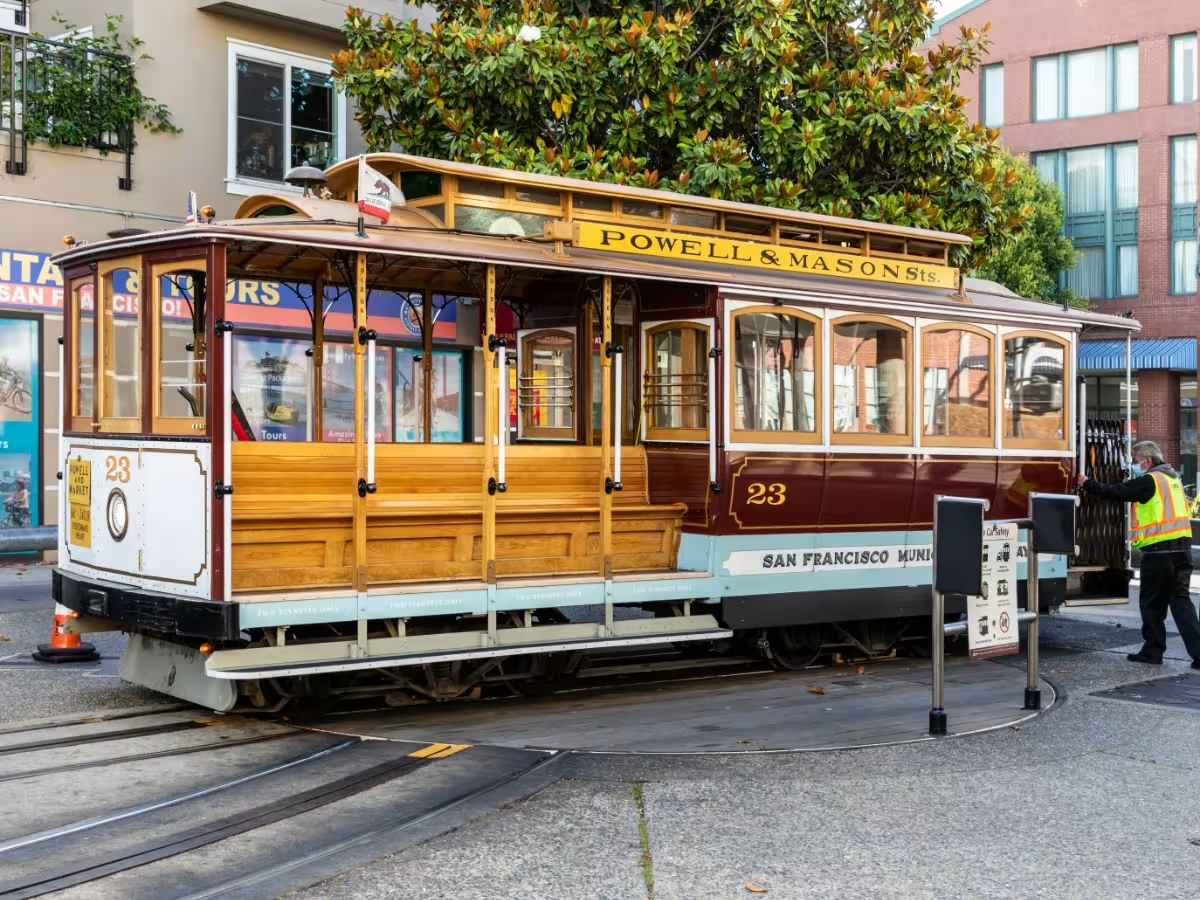
To validate Scott Onstott’s discovery in Google Earth, I placed a first marker on the Transamerica Pyramid, then a second at the intersection of Columbus Avenue and Mason Street. From these two initial points, the AI generated an enneagon with perfectly regular outlines, but too small to align with the outline of Treasure Island. I therefore placed the second point at the intersection of Taylor Street, near the famous Powell-Mason Cable Car turnaround, and obtained the result below. The northeast face of the enneagon follows the shoreline of Treasure Island with precision.
The Ennead according to Onstott
Symplanicity, as a coincidence or series of coincidences appearing on a geographic map, plays no role in the initial configuration of San Francisco's streets. As we have seen, that configuration resulted from rigorous planning intended to bring order to the real estate chaos of the Gold Rush.
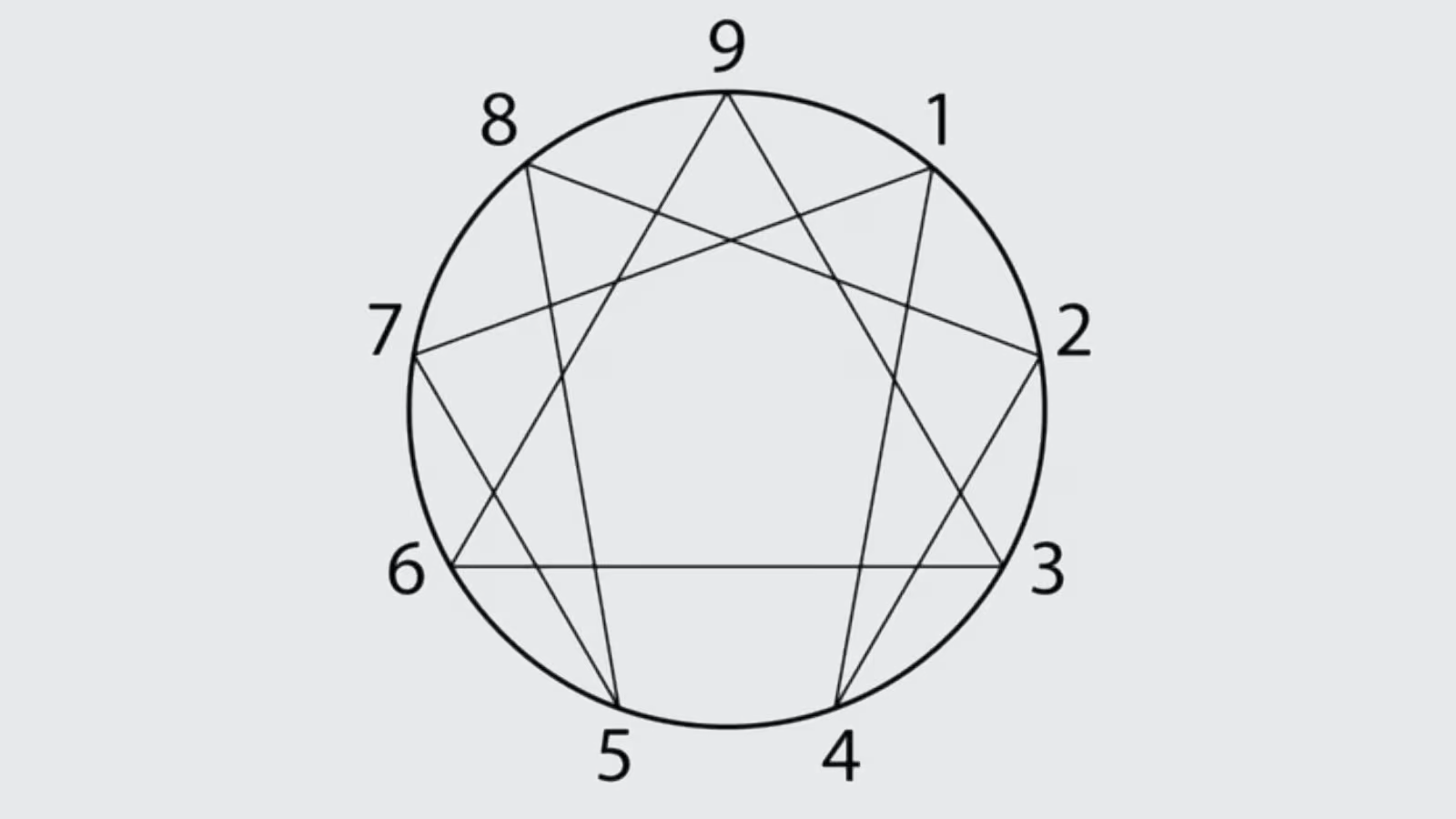
However, symplanicity is also defined as the appearance of lines of symbolic meaning on geographic maps. As such, Scott Onstott applies to the San Francisco enneagon an interpretive framework inherited from ancient Egypt, associating Atum, the creator of the universe, with the first vertex oriented north, while the Transamerica Pyramid, located at the sixth vertex, would correspond to Osiris, sovereign of the afterlife or judge of souls, depending on the interpretation. This is an interesting association, given that Transamerica is an insurance company that pays out benefits in the event of death!
I discovered a nine-sided polygon encoded in San Francisco resonating with the ennead. I have assigned the number 1 to the creator Atum. [...] My strategy was to assign the gods from the top down equally on both sides of the diagram. [...] The Transamerica Pyramid is at the vertex corresponding with Osiris in the ennead. Moving clockwise, Columbus Avenue runs along the edge that begins at the Pyramid, the oldest street grid of the city runs parallel to the next edge, the top vertex of the enneagon points due north, and Treasure Island’s location, orientation and edge match the corresponding edge of the diagram.
— Scott Onstott, Taking Measure: Explorations in Number, Architecture, and Consciousness, 2012, pp. 8-9.
The Enneagram in popular psychology
The modern concept of the Enneagram finds its origins in the teachings of the mystical philosopher George Gurdjieff, who introduced a nine-point symbol in the early 20th century as part of his system of self-knowledge. In Gurdjieff’s work, however, the Enneagram was not yet a personality model. The connection between this symbol and a psychological typology would come later.
In the 1960s and 1970s, the Bolivian philosopher Oscar Ichazo developed a series of psychological and spiritual systems that he grouped under the term Enneagram of Personality (capitalized). He associated the nine points of the symbol with nine personality types. The Chilean psychiatrist Claudio Naranjo Cohen, trained under Ichazo, subsequently contributed to developing and disseminating this approach by linking it to modern psychology. This is what is known as the Arica School.
It is in the San Francisco Bay Area—at Berkeley, at the Palo Alto school, and at the Esalen Institute in particular—that the contemporary Enneagram took root. Naranjo Cohen taught his system there starting in the 1970s, training a circle of students who would contribute to its dissemination throughout North America. The Enneagram thus went from a relatively obscure teaching to a widely known personality typology, though it is sometimes described as a pseudoscience. It joins Gestalt therapy, transpersonal psychology, the human potential movement, and biofeedback in the array of personal growth techniques popularized in California.
About Treasure Island
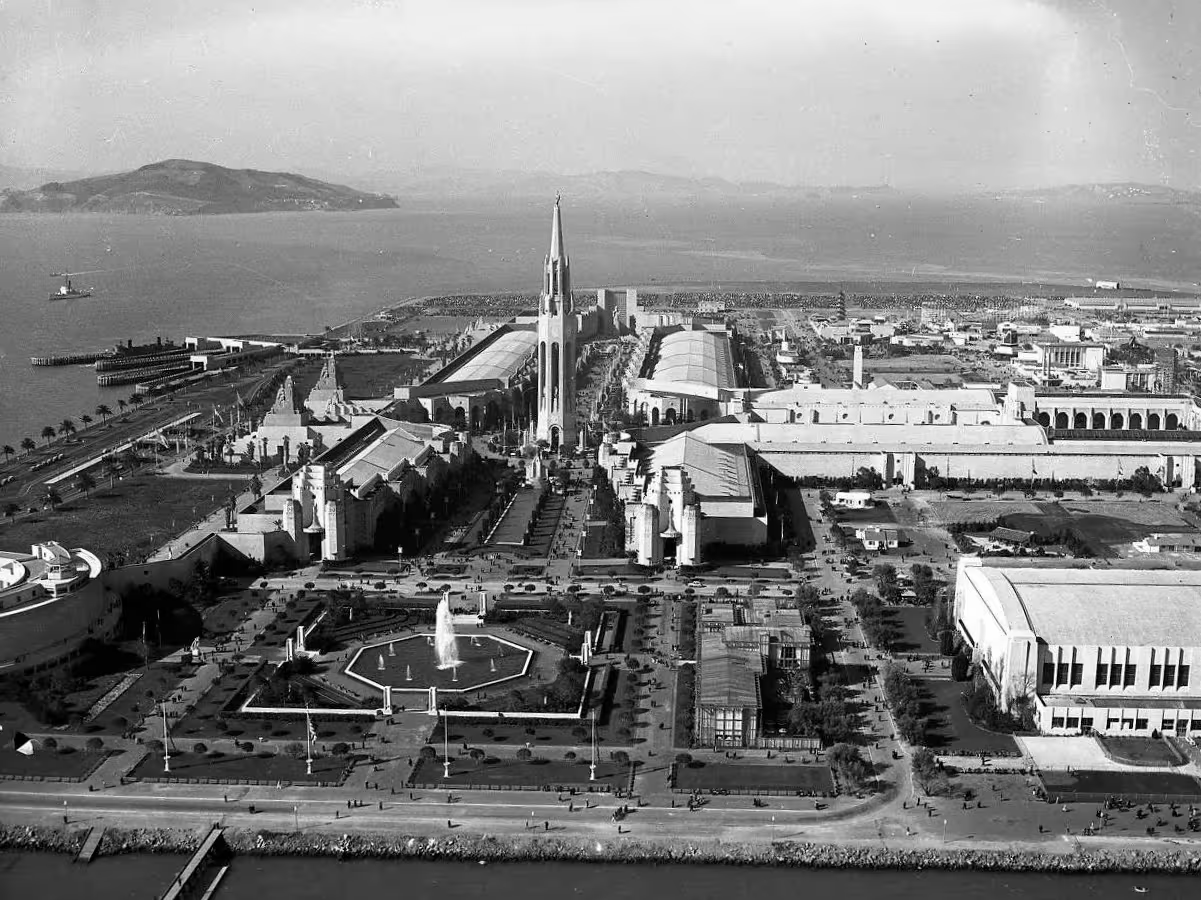
The history of this artificial island is worth examining more closely. Built on the shallows adjacent to the natural island of Yerba Buena, it hosted the Golden Gate International Exposition in 1939 and 1940, and later became a naval base during World War II.
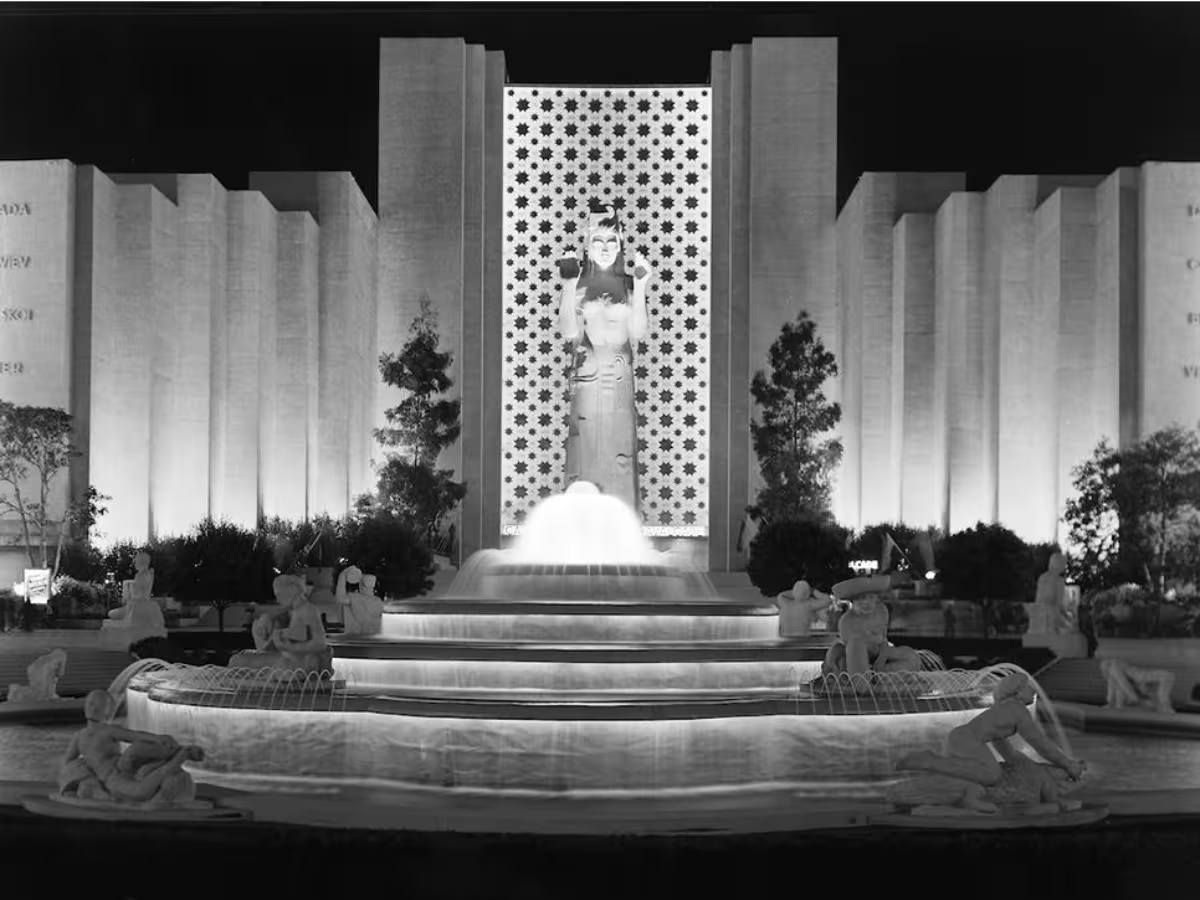
The Tower of the Sun was one of the central symbols of the exposition. Its architecture blended Art Deco motifs with influences drawn from the Pacific Rim. At its summit stood a golden phoenix, symbolizing the rebirth of San Francisco after the 1906 earthquake.
The Pacifica statue, a work by Ralph Stackpole, depicted a female figure embodying unity and peace among the peoples of the Pacific. Pacifica personified the political and cultural message of the exposition: to establish San Francisco as a gateway between the two shores of the Pacific and to promote their rapprochement. This served to prepare minds for the signing of the United Nations Charter in that very city in 1945.
In conclusion
San Francisco and its surrounding area remain the epicenter of the LGBTQ movement, counterculture, the IT industry, cybersecurity, and the synthetic reality imposed on us through algorithms. This city saw the birth of the United Nations, an organization increasingly discredited and powerless to ensure world peace.
With its pseudo-deity named Pacifica, its pavilions from Pacific Rim countries, and its amusement sector called the Gayway, the Golden Gate international exposition had already heralded these orientations in 1939. Over the following decades, the region hosted numerous therapies and spiritual movements associated with the New Age.
Scott Onstott applied Egyptian deities to the San Francisco enneagon. From the standpoint of symplanicity, the relevance of his interpretation is debatable, but the geometric figure he discovered remains very real. The enneagon prompts us to question San Francisco's role on a collective scale, just as the Enneagram of popular psychology allows for the characterization of individuals.