



The hantavirus outbreak aboard a Dutch cruise ship has generated intense media attention in recent weeks, to the point that some suspected nothing less than a pure “communications operation” orchestrated by a WHO struggling with a loss of credibility since the covid vaccine fiasco. Here is what symplanicity has to say about it.
The Actual Route vs. the Shortest Path
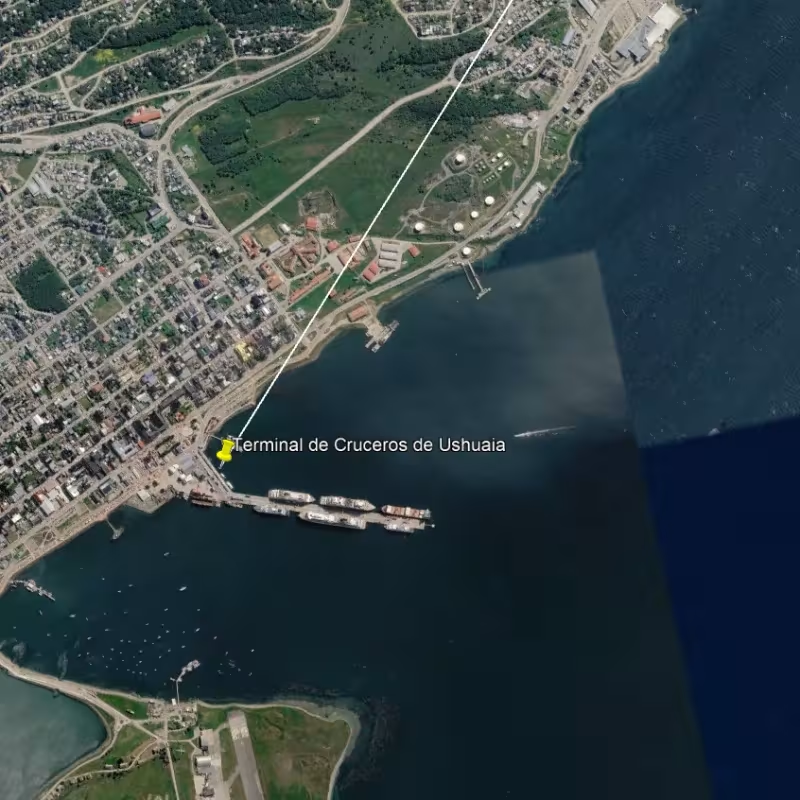
Let us begin by connecting the departure point of the MV Hondius on April 1, 2026 (the cruise terminal in Ushuaia, Argentina) with its arrival point on May 18 (Calandsteiger 7 quay in Rotterdam). The result is a straight line stretching 13,589 kilometers.
The ship’s actual itinerary was more complex and notably passed through South Georgia, Tristan da Cunha, and the island of Saint Helena, from where a first passenger who died on April 11 was evacuated. But symplanicity follows the shortest path.
Let us therefore examine the relationship between this “shortest path” and the subsequent events, once the Andes hantavirus had been formally identified as the source of a second and third death.
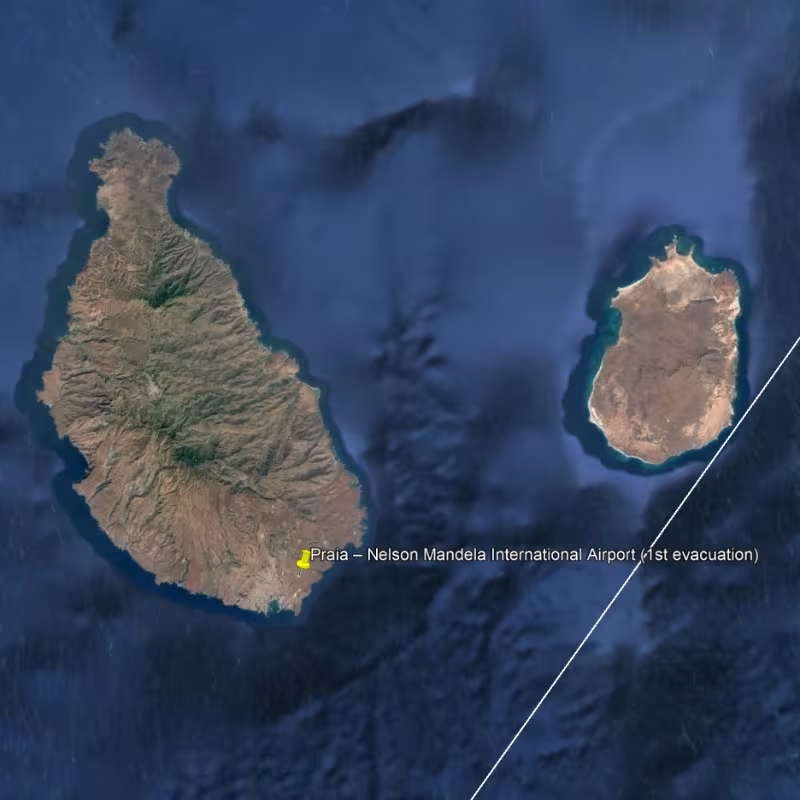
- The cruise was supposed to end on May 3 in Praia, the capital of Cape Verde, but the country’s authorities refused disembarkation. Three critically ill passengers were nevertheless evacuated via Nelson Mandela Airport, located 29 kilometers from the line, while the ship remained anchored well offshore.
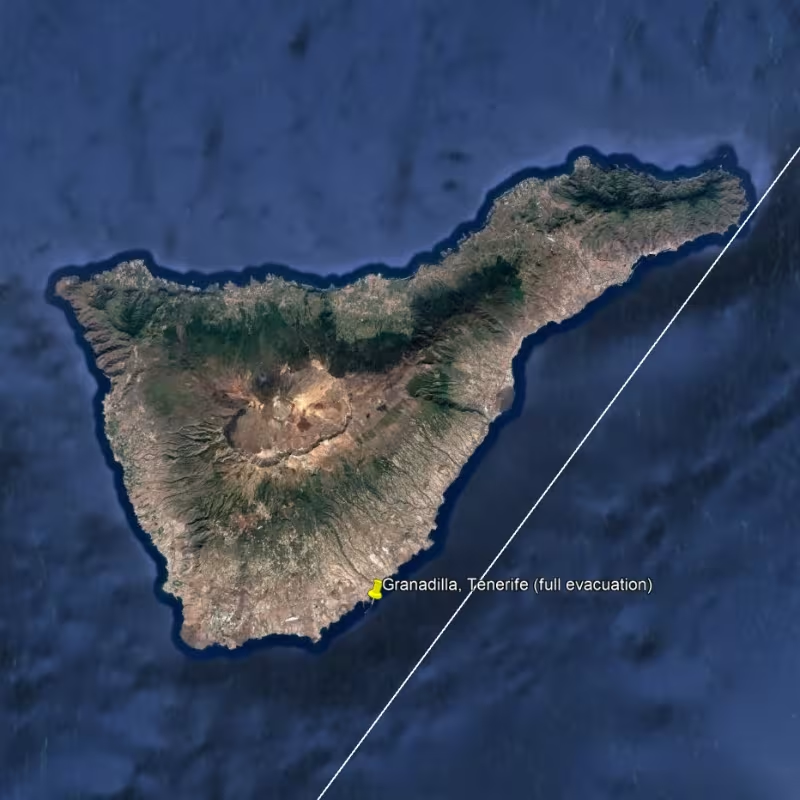
- The evacuation of all remaining passengers took place at the industrial port of Granadilla, Tenerife, only 8.5 kilometers from the line. It is here that we reach both the maximum geographical precision of the alignment and the peak media visibility of the entire operation. The deviation from the main axis here is barely 0.063%, or 1/1600.
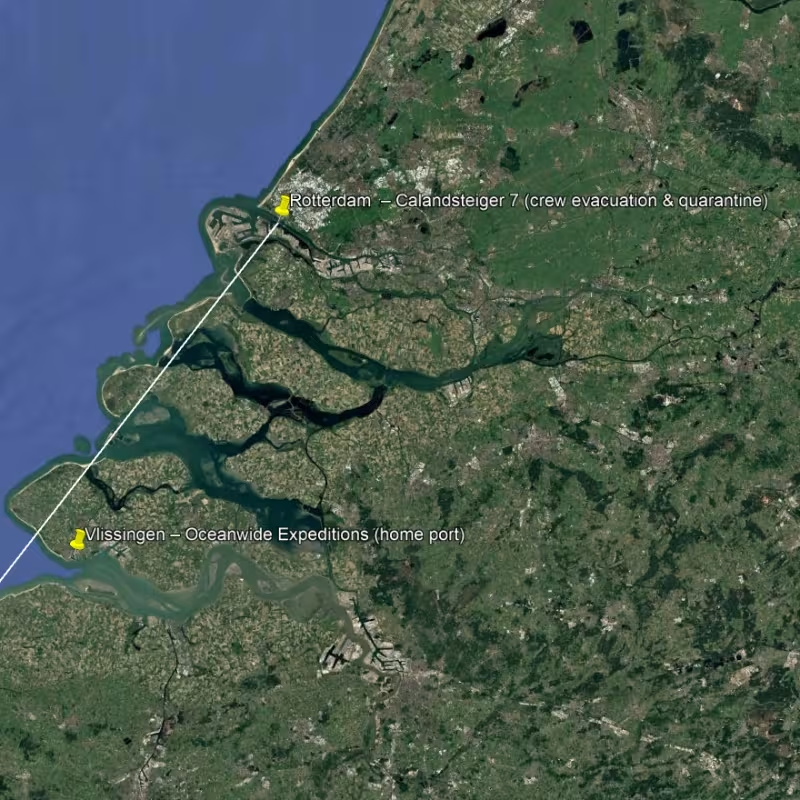
- We also see that the line passes within 7 kilometers of the headquarters of Oceanwide Expeditions, at the home port of Vlissingen, in the Netherlands.
- Finally, the remaining 25 crew members were placed in quarantine on an isolated quay in the port of Rotterdam, bringing this ill-fated cruise to an end.
Beyond the health aspect of this story, we can see that the Cape Verde islands and the Canary Islands have regained their historical role as relay points between Europe and South America — a role they once played when Dutch, Portuguese, and Spanish sailors explored the world’s oceans in search of commercial opportunities.
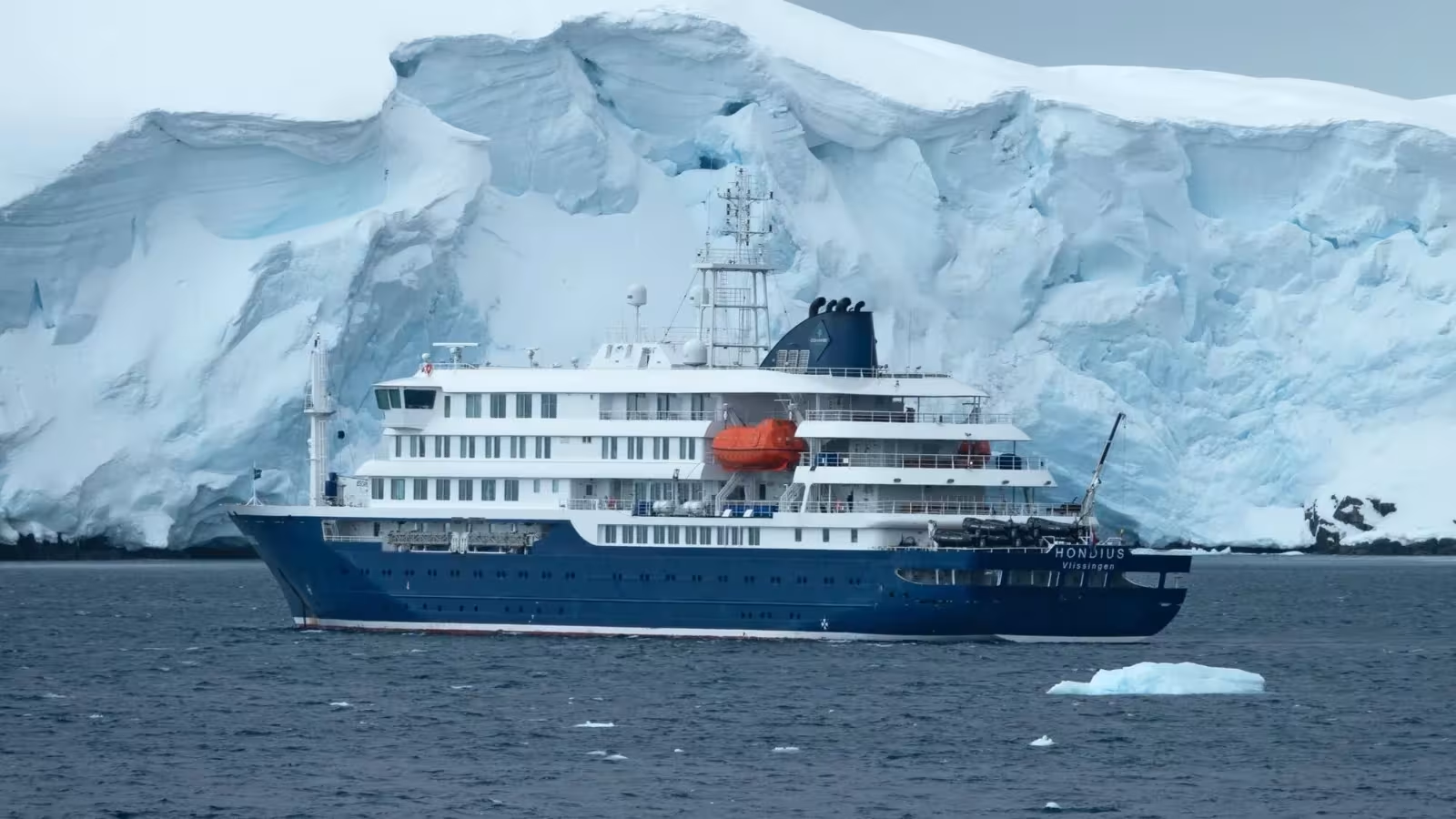
Photo : The polar cruise ship MV Hondius off the coast of Antarctica | discover-the-world.com