




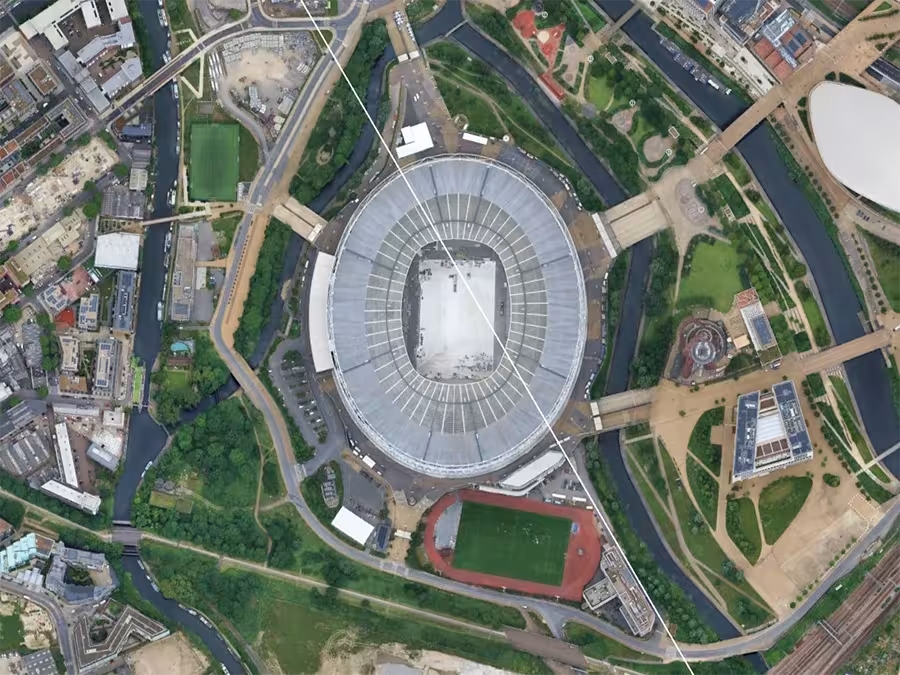

The 2012 London Olympics sparked a lot of interest in leylines and their symbolism. At the time, some esoteric interpretations suggested that geographic alignments and stone circles in London’s East End acted as energy channels or amplifiers. The biblical undertones of the streets surrounding the Olympic sites also drew plenty of attention. This is where we step into the world of symplanicity, a concept sensed by independent researchers long before it began to gain recognition.
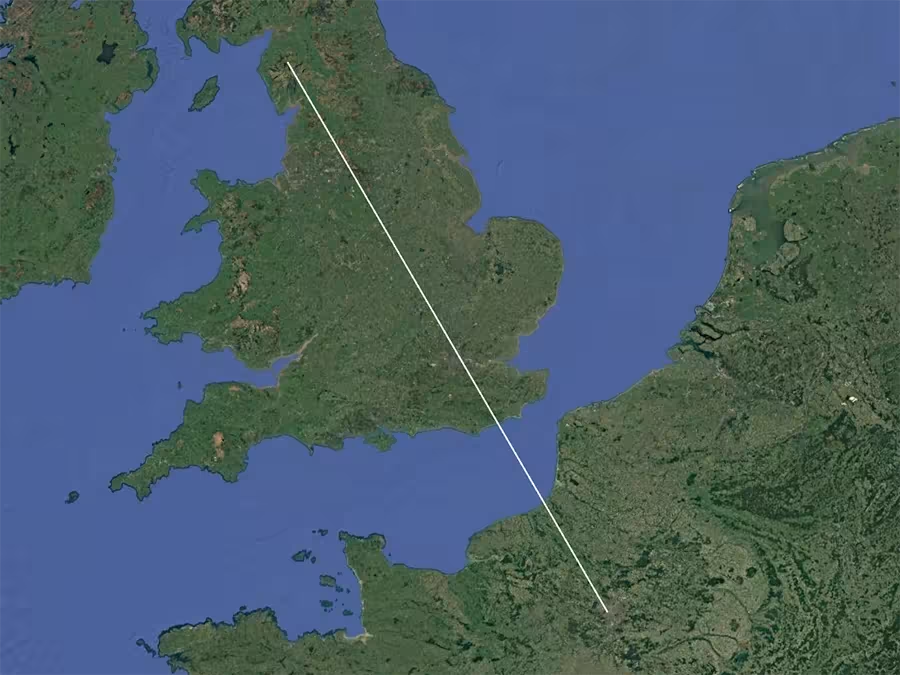
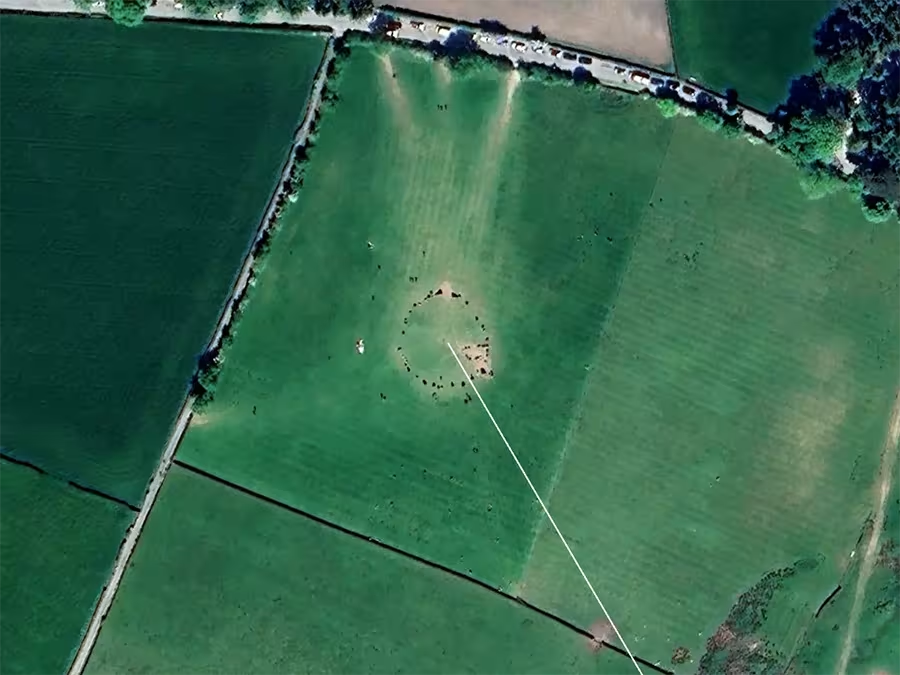
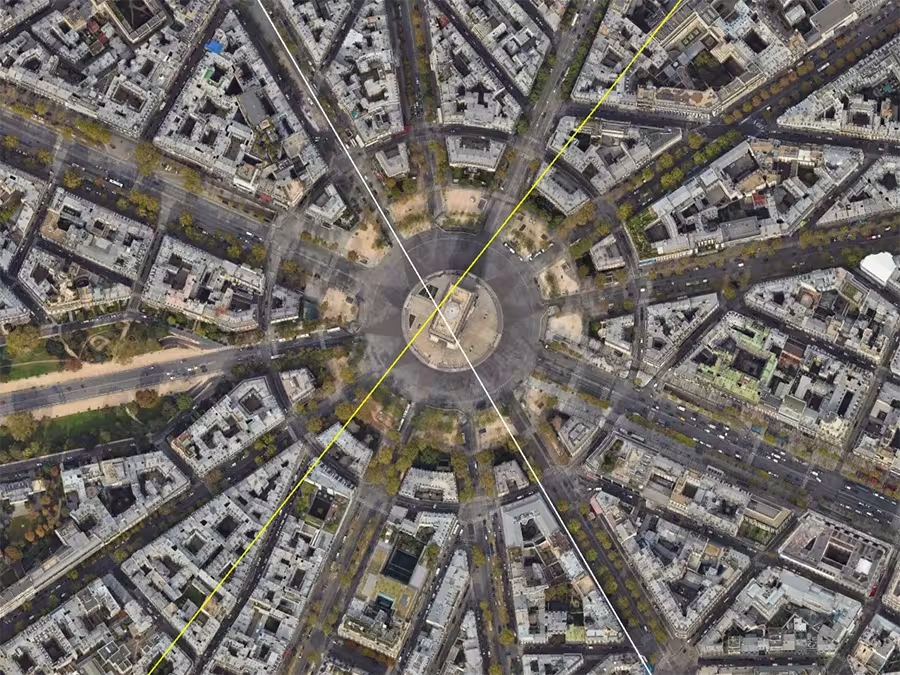
In a similar vein, here’s a striking “line of meaning” based on the spatial relationship between the Castlerigg stone circle in northwest England and Place Charles-de-Gaulle (formerly named Place de l’Étoile) in Paris. On the surface, these two sites don’t have much in common—except for their radial shape and symbolic radiance.
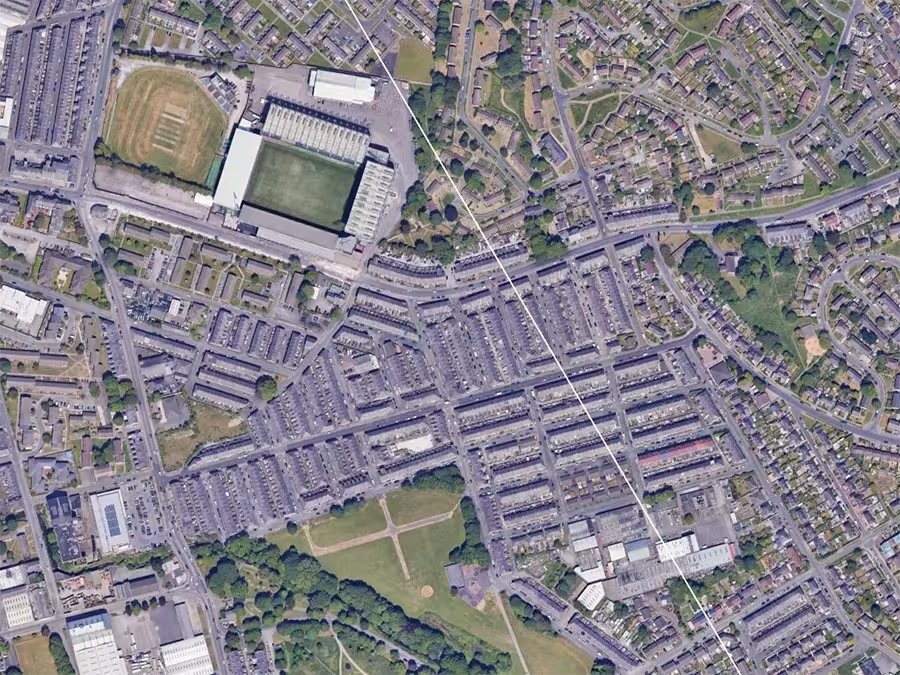
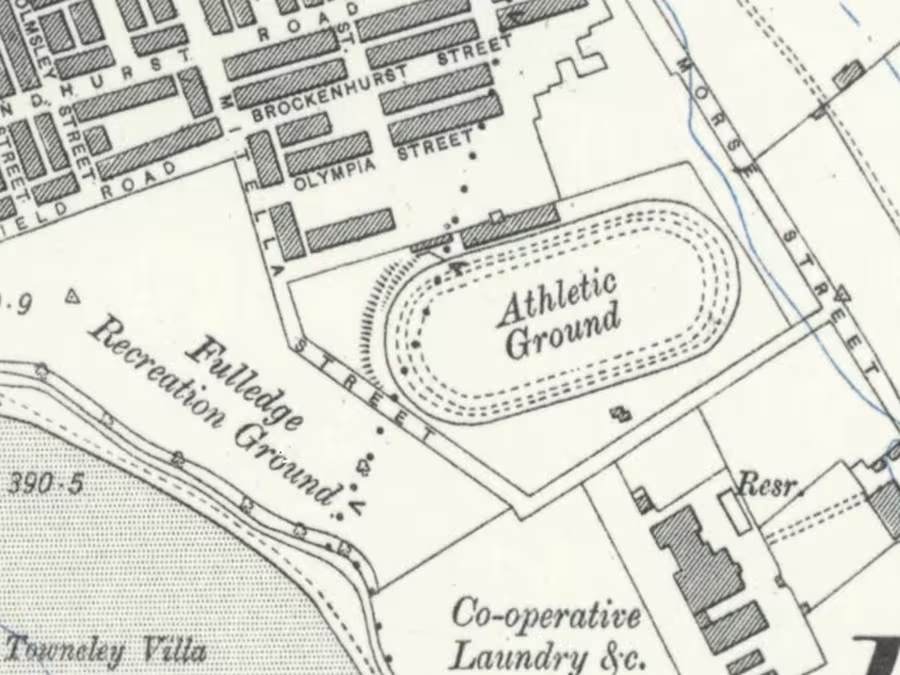
However, the resulting line crosses both the London 2012 Olympic Stadium and the Yves-du-Manoir sports complex, which hosted the 1924 Paris Olympics. In Burnley (Lancashire), the line also passes through Athletic Street and Olympia Street—adding a neat wordplay—while skimming Turf Moor, home of the famous Burnley Football Club.
In the Paris region, a secondary line connecting Parc des Princes and Stade de France runs right through the Arc de Triomphe at Place de l’Étoile. You can’t make this stuff up!
Finally, there are two geographic quirks unrelated to sports. Near Burnley, the land parcels form a triangle, one side perfectly parallel to the main axis. Could this be the “Pennine Triangle” of Cornholme, famous for UFO sightings in the 1970s? Further south, Leicester airfield has a runway perfectly aligned with the main axis. These coincidences suggest we’re onto something—but what exactly?
While the symbolic connection between all these sites is tenuous, this geographic configuration evokes a sense of athletic performance. It brings sport stars to life on our TV screens.