
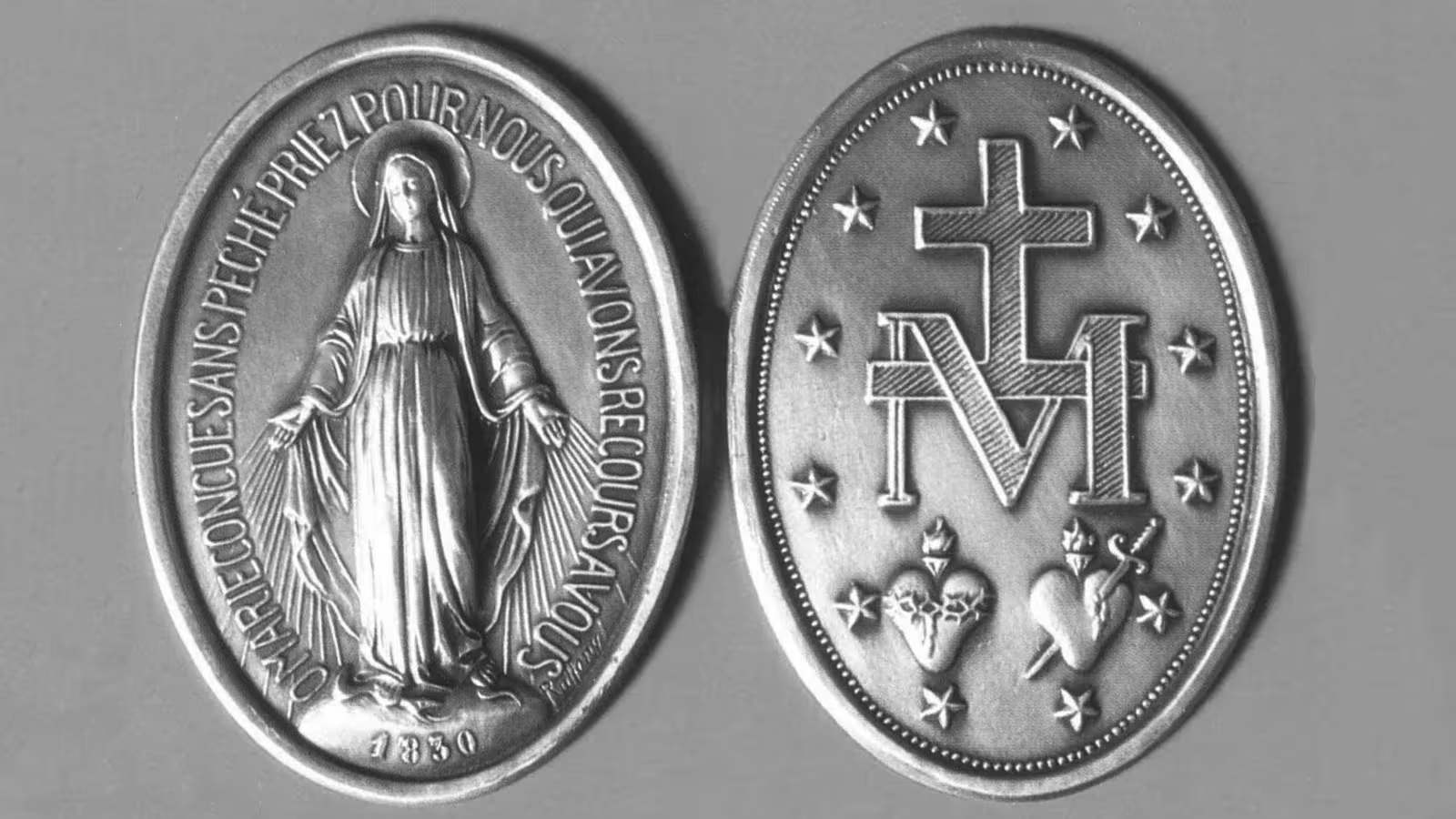

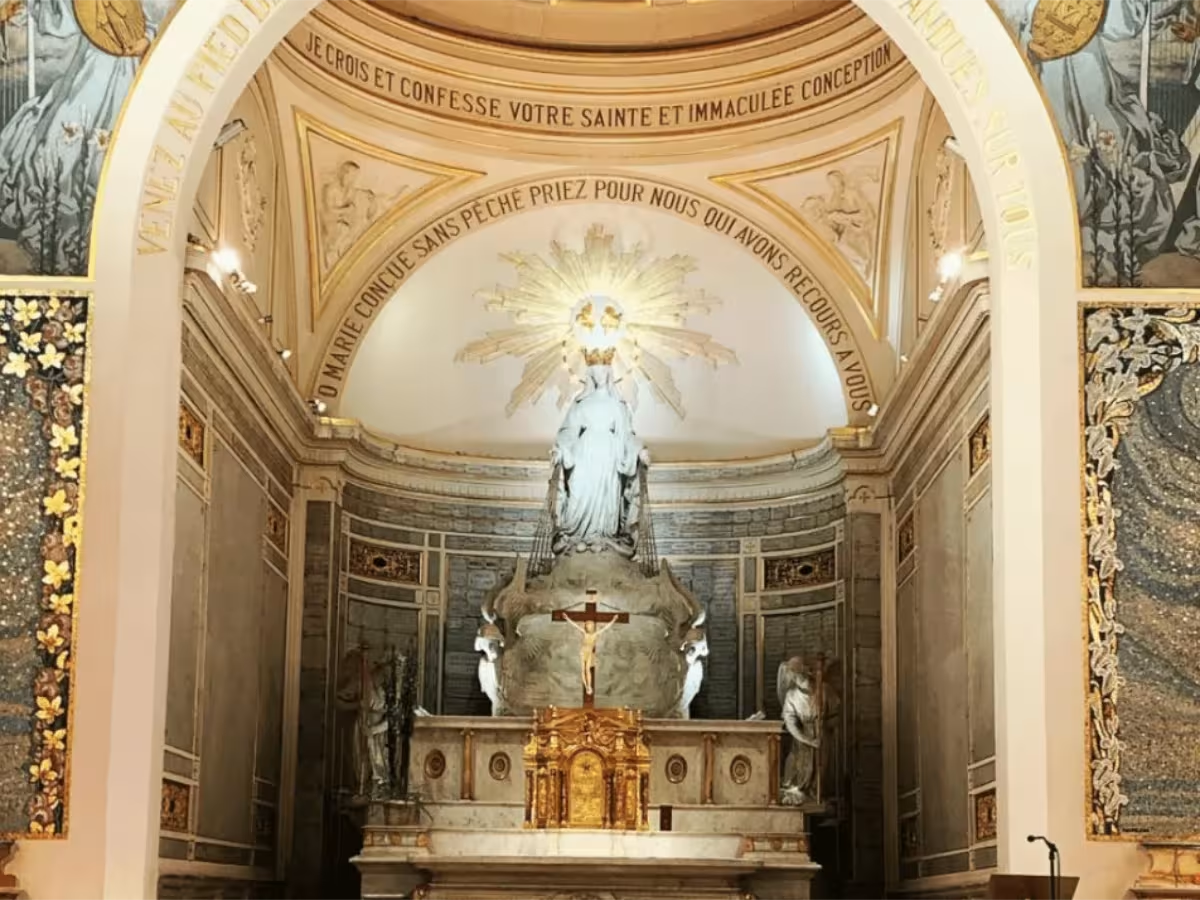

The Miraculous Medal originates from the 1830 apparitions in which the Virgin Mary appeared to Catherine Labouré, a novice of the Daughters of Charity of Saint Vincent de Paul, in a chapel located at 140 rue du Bac in Paris. During the apparition of November 27, she showed her the design of a medal to be struck, promising graces to those who would wear it with confidence. On the reverse appears a large “M” surmounted by a cross, surrounded by two hearts—the Heart of Jesus and the Heart of Mary—symbolizing their spiritual union.
Struck with the approval of the Archbishop of Paris, the medal began to be distributed in 1832, at a time when France was severely affected by a cholera epidemic. It was soon attributed with powers of protection and healing. Since then, it has been distributed in more than one billion copies worldwide. Here, we will examine how three elements of the medal are reflected across the territory of France: the “M” and the cross above it, as well as the Sacred Heart of Jesus.
The “M of Mary”
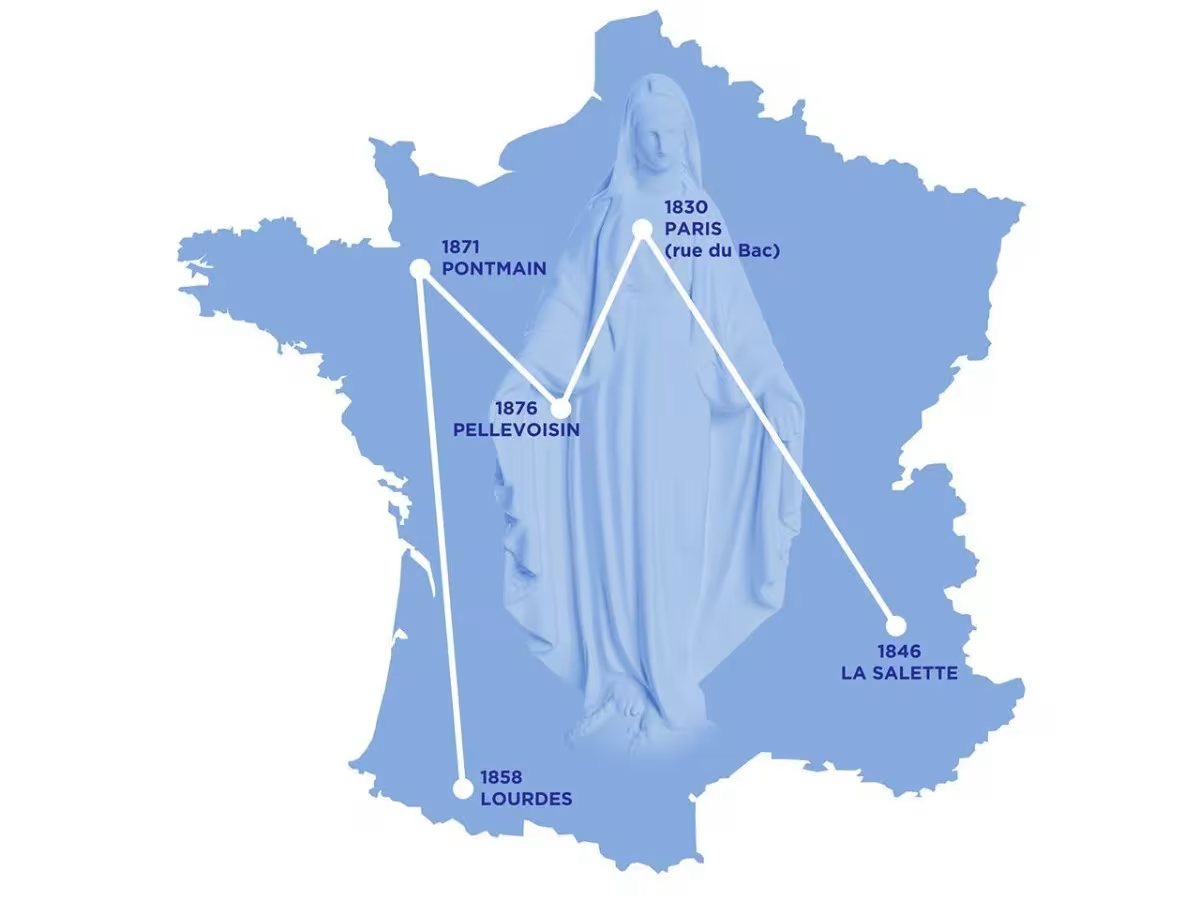
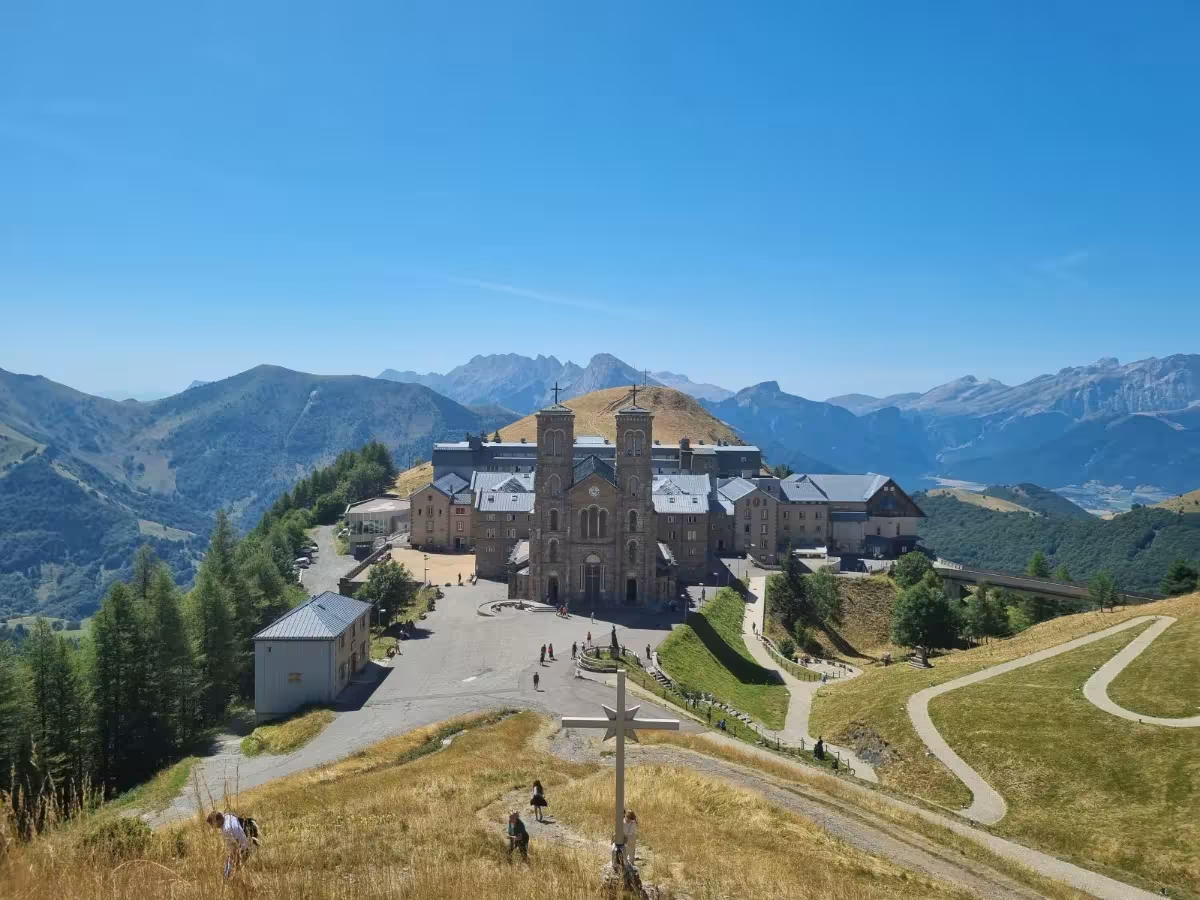
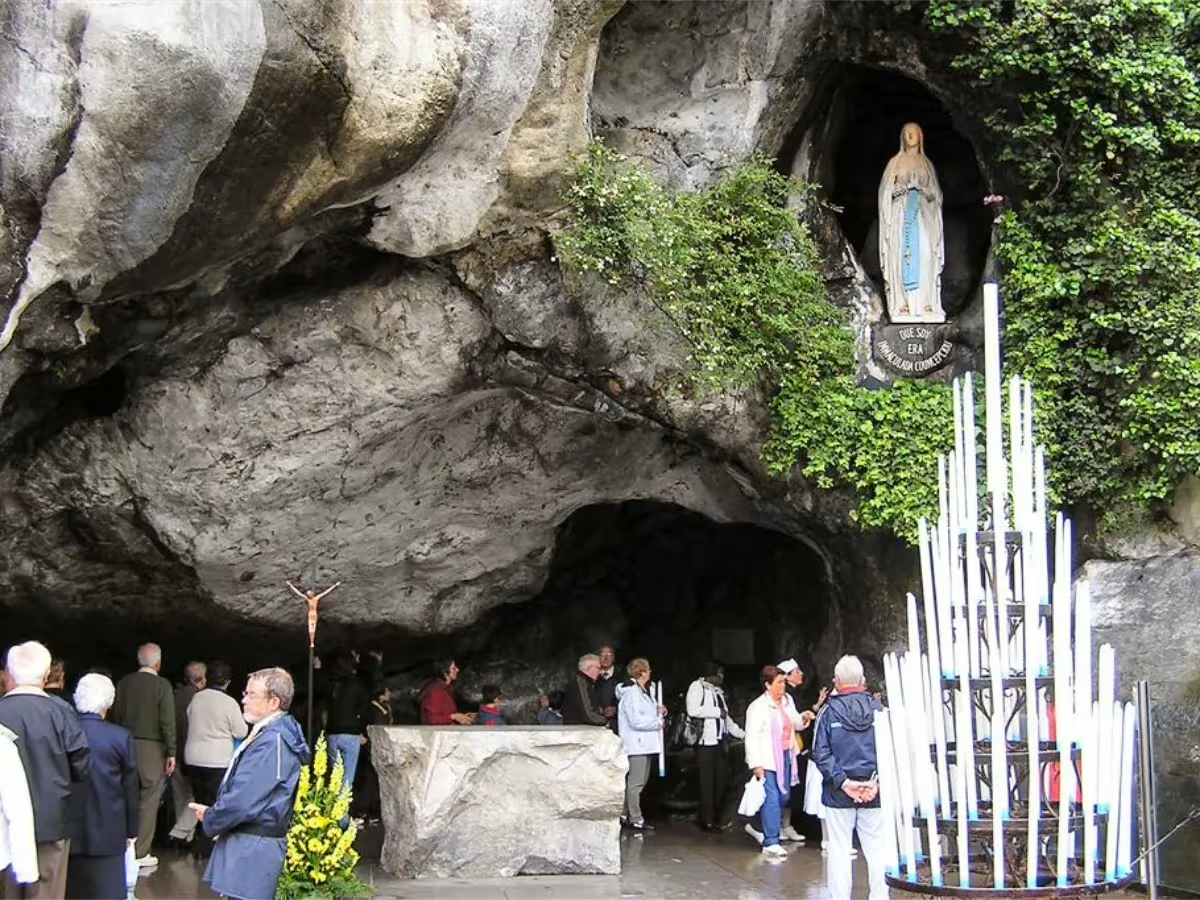
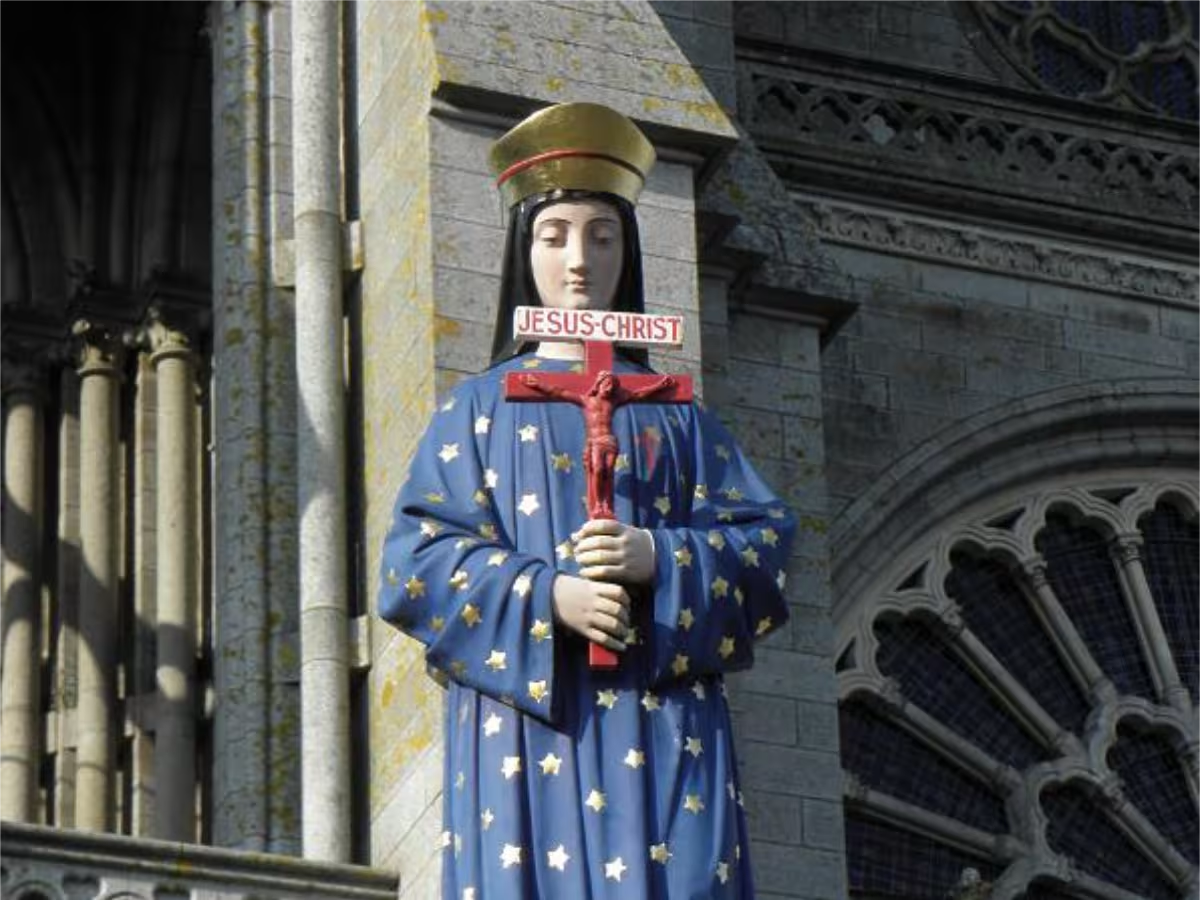
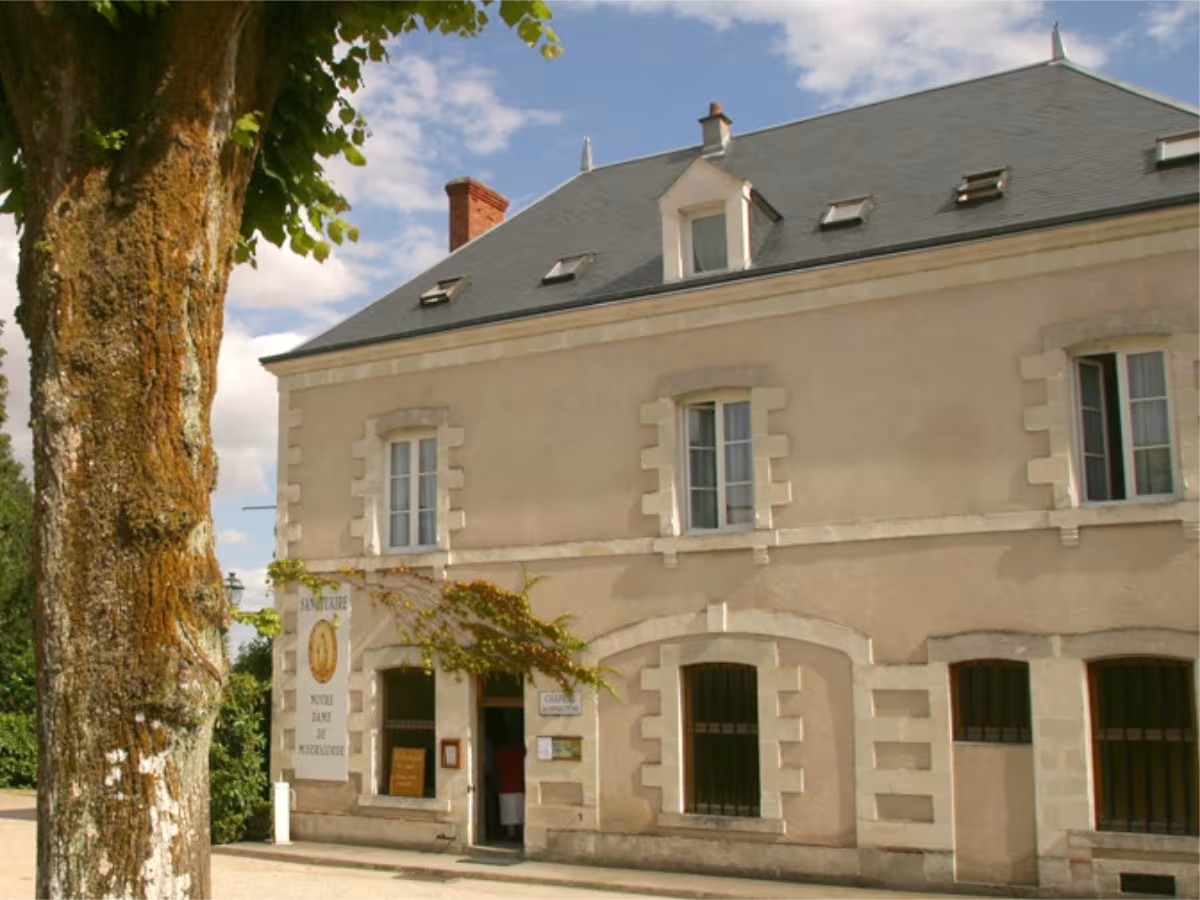
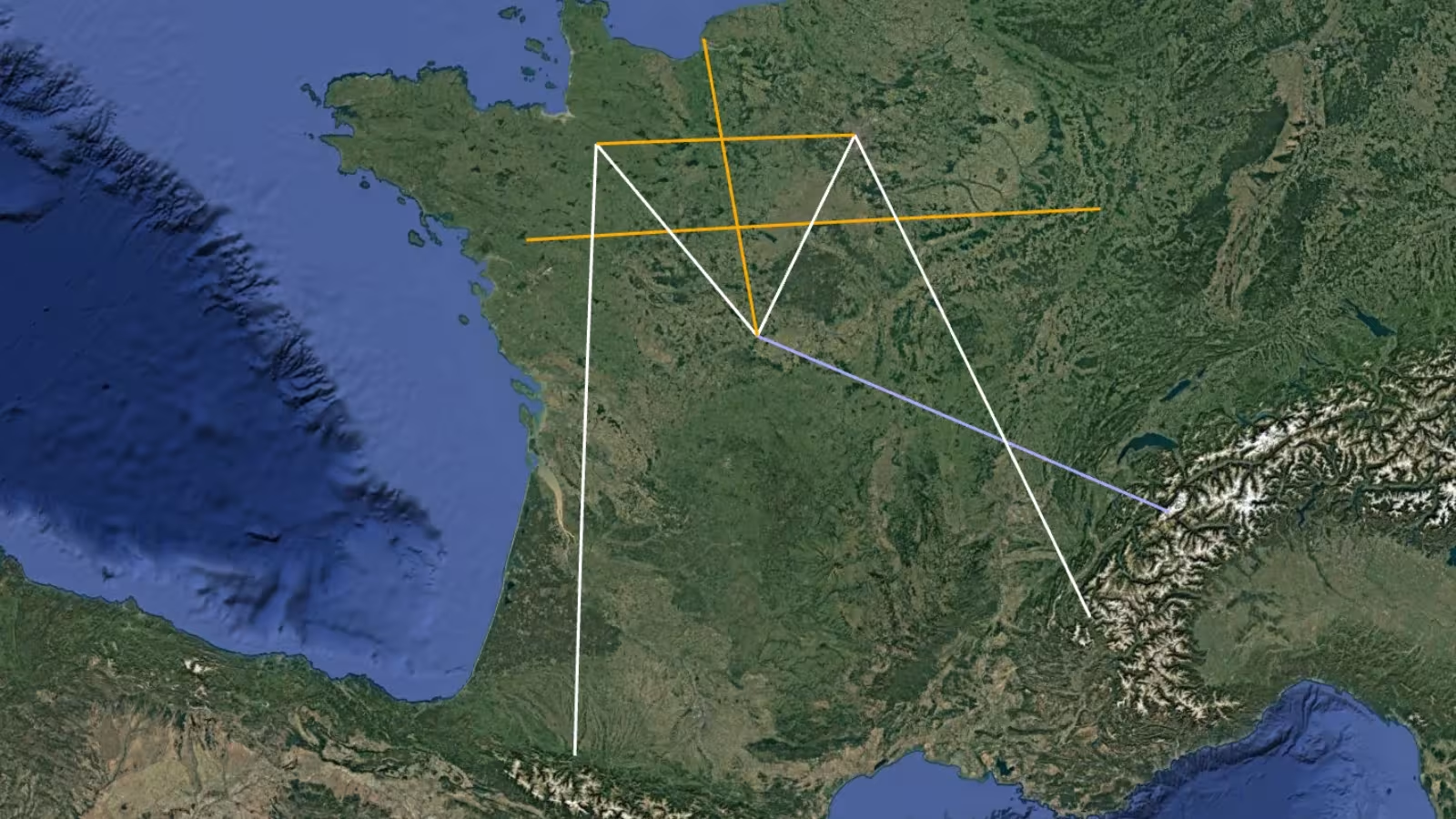
The “M of Mary” represents the initial of Mary, but it is also associated with a symbolic geography linking several subsequent apparitions. The line formed by the apparitions of La Salette (1846), Lourdes (1858), Pontmain (1871), and Pellevoisin (1876), passing through Rue du Bac, thus creates an “M” on the scale of the French territory.
It is a form of symplanicity whose origin is attributed to the Virgin Mary herself, but whose meaning has gradually been revealed over the past decades. According to symplanicity researcher Michel Bogé, the first representation of the “M of Mary” over France dates to 2010 and originates from the Abbey of Fontevraud. The “M of Mary” is now associated with spiritual practices, pilgrimages, and interpretations of sacred geography.
The Cross of Christ
Michel Bogé traced the origin of the cross that surmounts the “M”:
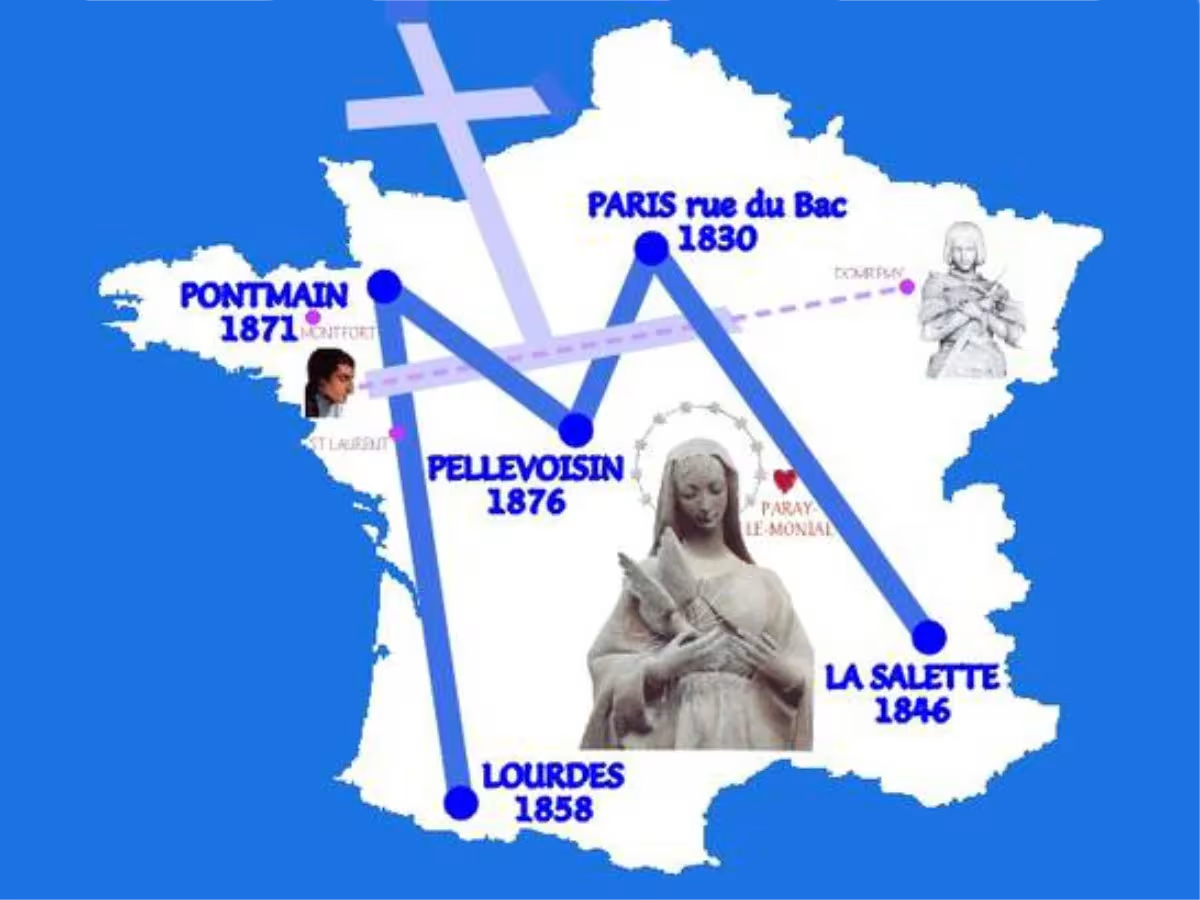
Father Robert Pannet, author of The Marian Epiphany in Five Acts, tells us that it was Father Aladel, confessor of Catherine Labouré, who is said to have added the Cross of Christ and, consequently, the horizontal bar of this Cross intertwined with the “M.” This line connects Domrémy, the birthplace of Joan of Arc, to La Fraudais, the village of Marie Julie Jahenny, a well-known Catholic mystic.
Originally from Le Havre, Bogé therefore reconstructed the cross surmounting the “M” based on the following axes:
Sanctuary of Pellevoisin → La Trappe → Sacred Heart of Le Havre
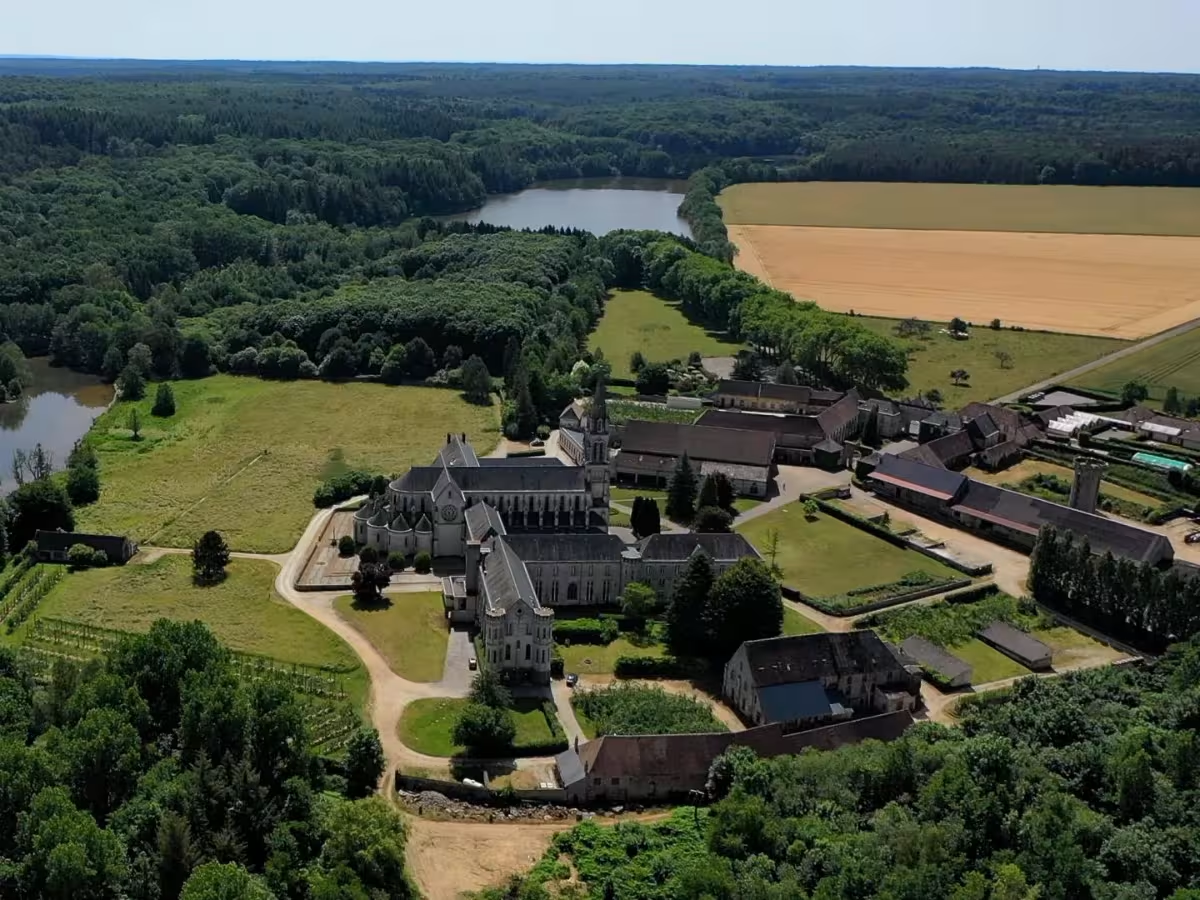
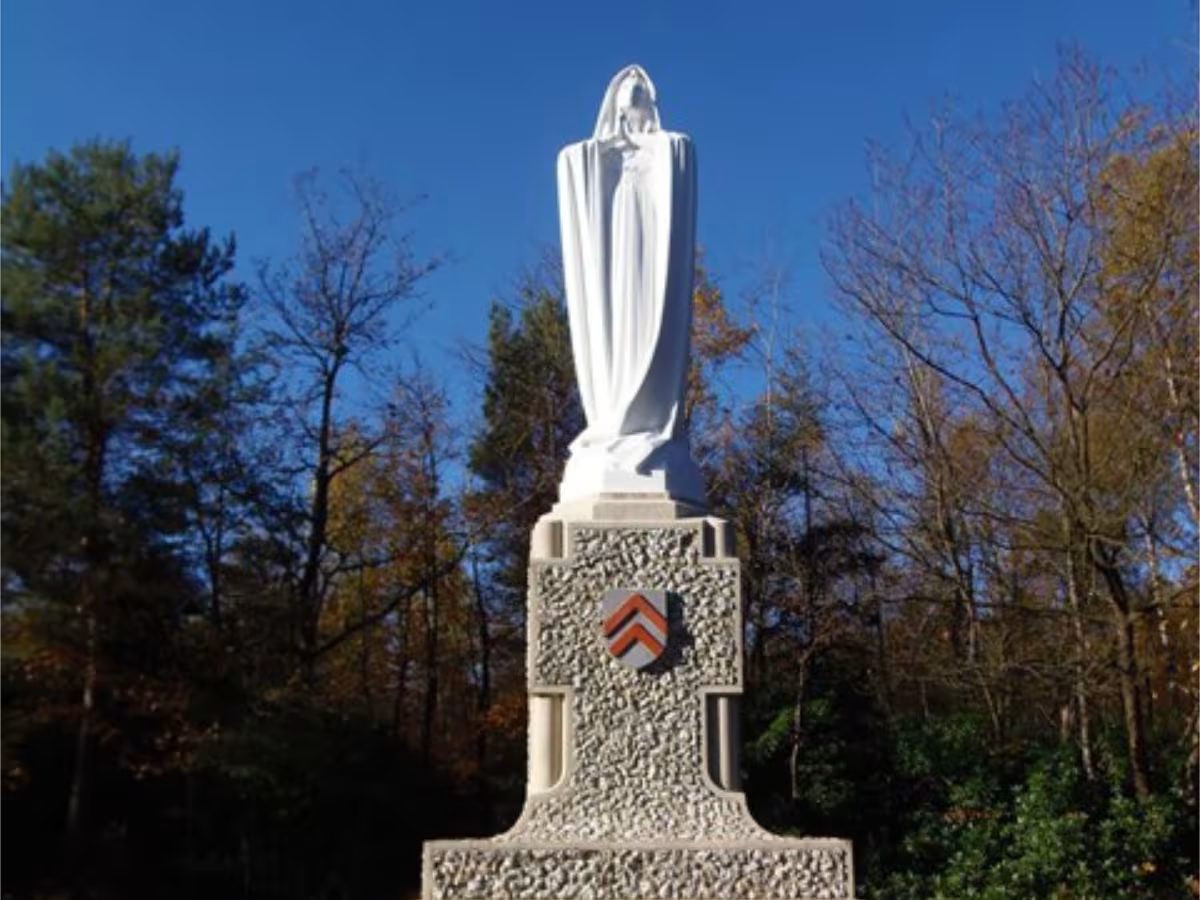
Built in 1887 and dedicated to the Sacred Heart of Jesus, the Church of the Sacred Heart of Le Havre is part of the spiritual tradition stemming from the revelations of Marguerite-Marie Alacoque at Paray-le-Monial in the 17th century. The axis thus drawn from Pellevoisin passes within one kilometer of La Trappe Abbey. A statue of the Virgin Mary, named Our Lady of Confidence, was erected in 1947 on the wooded hill overlooking the monastery. It fulfills a vow made to protect the abbey from destruction during the Second World War.
Notre-Dame de Pontmain → La Trappe → Rue du Bac
The horizontal beam of the cross (patibulum) lies between the Basilica of Notre-Dame de Pontmain and Rue du Bac. Midway between Pontmain and Paris, the vertical shaft and the crossbeam meet at a hamlet aptly named Les Barres (The Bars), very close to the statue of Our Lady of Confidence. The Abbey of La Trappe and its statue therefore represent the crossing point, or the “heart,” of the cross.
La Fraudais → Sens → Troyes → Domrémy
The base of the cross, or the bar crossing the “M” of the Miraculous Medal, is drawn between the cottage of Marie Julie Jahenny at La Fraudais (Blain) and the birthplace of Joan of Arc. Thus connected, these important sites of Christian mysticism pass directly through the cities of Sens and Troyes, while also running midway between Patay and Orléans. Here we recognize four cities whose history is closely linked to the military exploits of Joan of Arc. Moreover, this axis lies equidistant between Montfort and Saint-Laurent-sur-Sèvre, the birthplace and place of death of Saint Louis-Marie Grignion de Montfort, a major figure of Marian spirituality.
As can be seen below, these actual alignments (base, shaft, and crossbeam) more closely resemble a Cross of Lorraine when visualized in Google Earth.
The Sacred Heart of Jesus
Michel Bogé points out that the sanctuary of Paray-le-Monial, dedicated to the Sacred Heart of Jesus, is located at an equal distance between Pellevoisin and the summit of Mont Blanc, thus giving not only a symbolic but also a physical elevation to the elements depicted on the Miraculous Medal:
My intuition led me to draw a straight line from the chapel of the apparition of the Virgin at Pellevoisin to Paray-le-Monial, the town renowned for having been the site of several apparitions of Jesus to Sister Marguerite-Marie Alacoque between 1673 and 1675. Extending this line, one finds that it reaches the Mont Blanc massif.
By directly linking the summit of Mont Blanc to the chapel of Pellevoisin, one observes that the line passing through Paray-le-Monial precisely intersects Rue de la Visitation, between the Basilica of the Sacred Heart and the chapel of the apparitions. A remarkable symplanicity for a line stretching over more than 400 kilometers, and above all a striking expression of coherence between sacred geography and the realm of meaning (here moving from a two-dimensional plane to a three-dimensional volume, with the contribution of the country’s highest peak).