


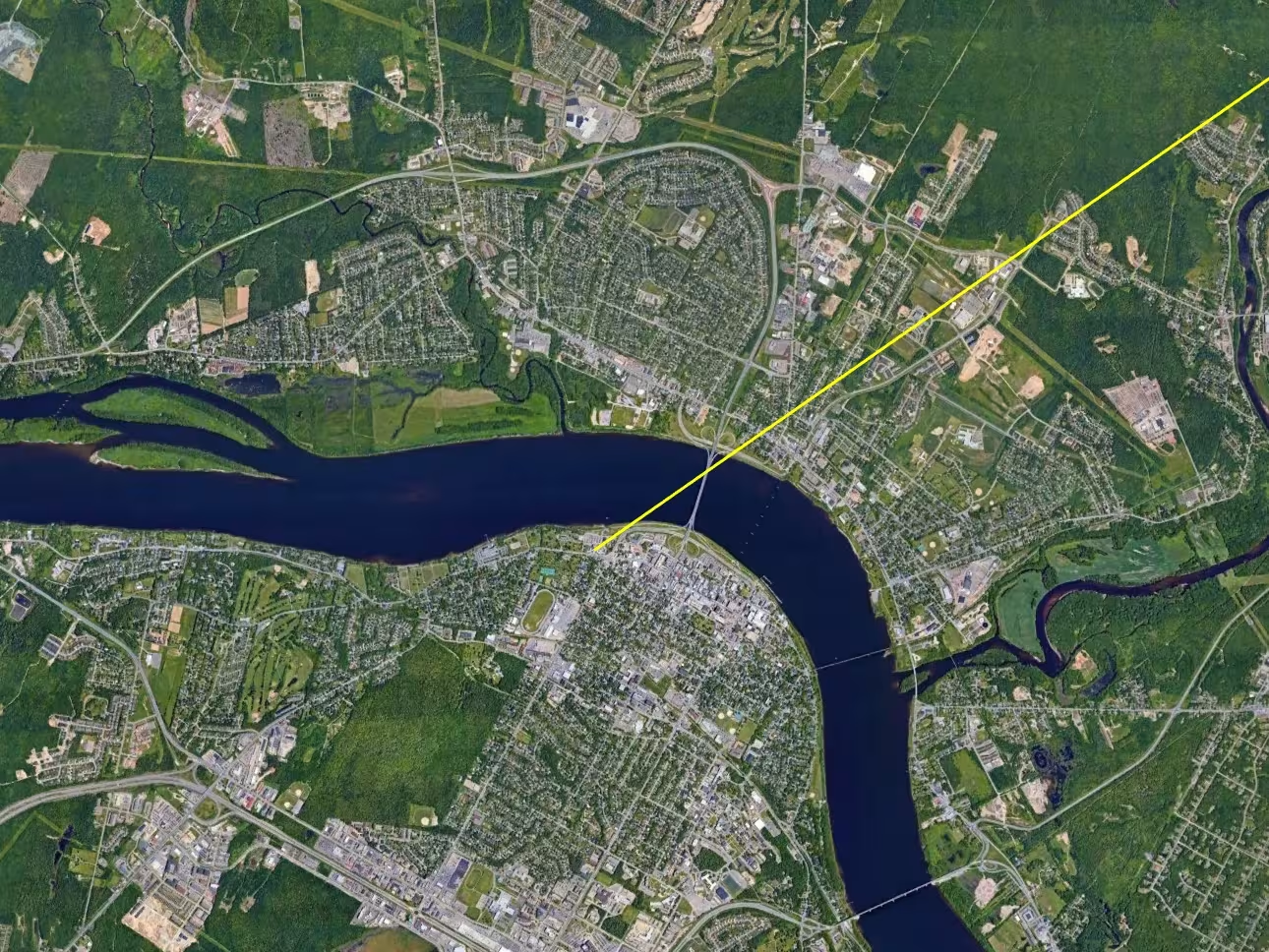




John Bosnitch is a journalist born on February 15, 1961, in Fredericton, New Brunswick, to a Serbian father and a Canadian mother. Holding dual citizenship, he often uses the word “predestination” to describe both the timing of his birth in Canada while a total solar eclipse was visible over Serbia, and the circumstances that later led him to defend chess champion Bobby Fischer, who was detained in Japan following pressure exerted by the United States Department of State. His open-mindedness and international background made him an ideal subject for a long-distance symplanistic inquiry.
Career Highlights
John has worked notably in the United States, Canada, and Serbia, but we will focus here on three key moments in his career:
- his showdown with the administration of the University of New Brunswick while representing engineering students in the mid-1980s;
- his stay in Sarajevo as a war correspondent for Japanese newspapers in 1995;
- his successful career as a journalist and political adviser in Japan, which took an unexpected turn when Bobby Fischer was imprisoned there in 2004.
A Rematch Against the Empire
The common thread running through these events is Anglo-American colonialism in all its forms.
John Bosnitch quickly came to view Canada as a rear base of the Empire. Describing his native province as a “plantation” and its academic establishment as “corrupt,” he left to study at McGill University in Montreal, where he says he encountered a culture marked by racism and materialism.
As a correspondent in Sarajevo, he saw firsthand the extent to which Anglo-American media outlets such as CNN and Reuters manipulated information and promoted an anti-Serb narrative incompatible with any notion of neutrality. This was before NATO bombed Yugoslavia from March to June 1999 without authorization from the United Nations Security Council. That unilateral intervention, illegal under international law, would confirm his fears.
In Japan, John himself was thrust into the spotlight when he founded the Committee to Free Bobby Fischer. The chess champion was being pursued by the United States Department of State for the “crime” of defying U.S. sanctions by playing in a chess tournament in Belgrade in 1992. Fischer was unjustly imprisoned by a vassal state on the pretext of an invalid passport. But John understood Japanese culture and the workings of the media, and used those strengths to his advantage. Fischer left Japan in 2005 after being granted Icelandic citizenship. He would spend his final years in Reykjavík, where he had been crowned world champion in 1972.
An Eloquent Lifeline
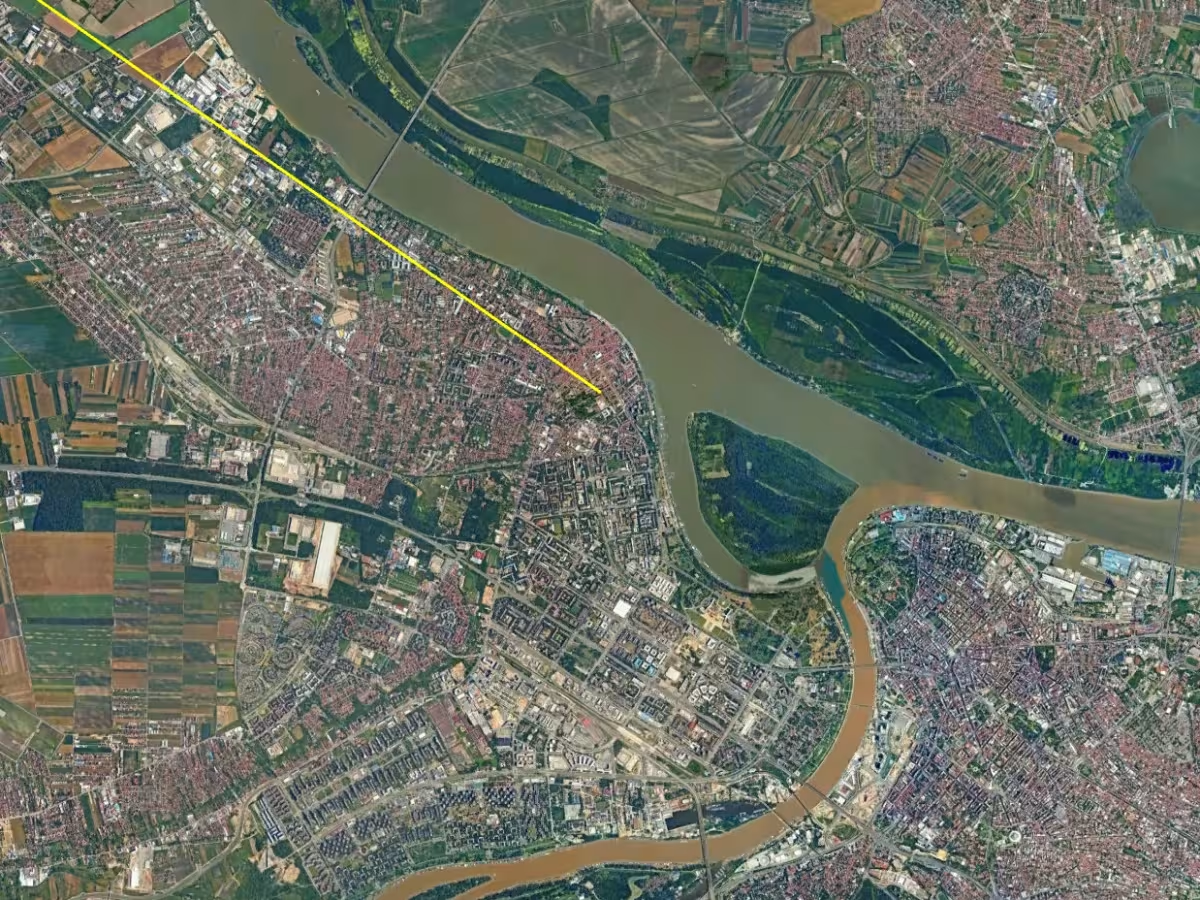
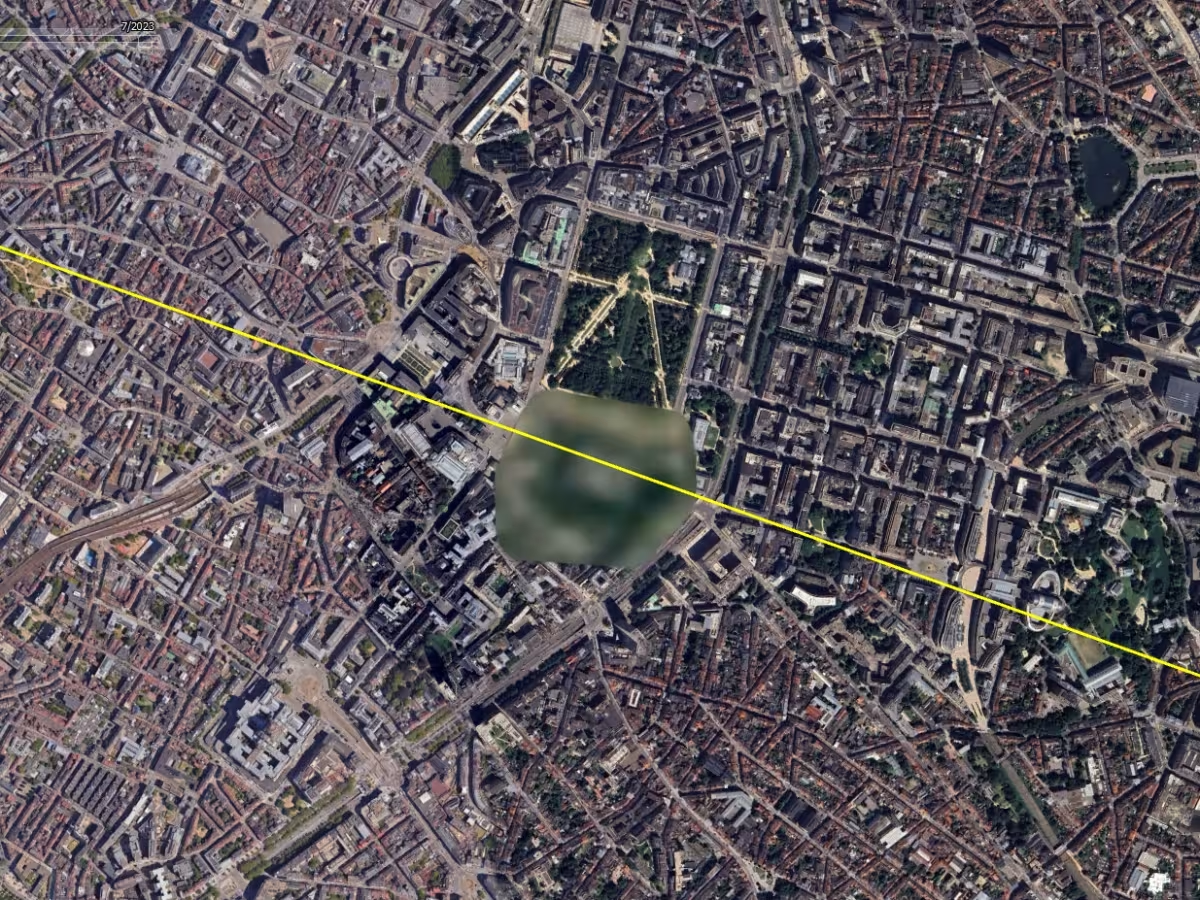
By connecting John Bosnitch’s exact birthplace with his residence in Belgrade at the time this research was conducted, two things become apparent:
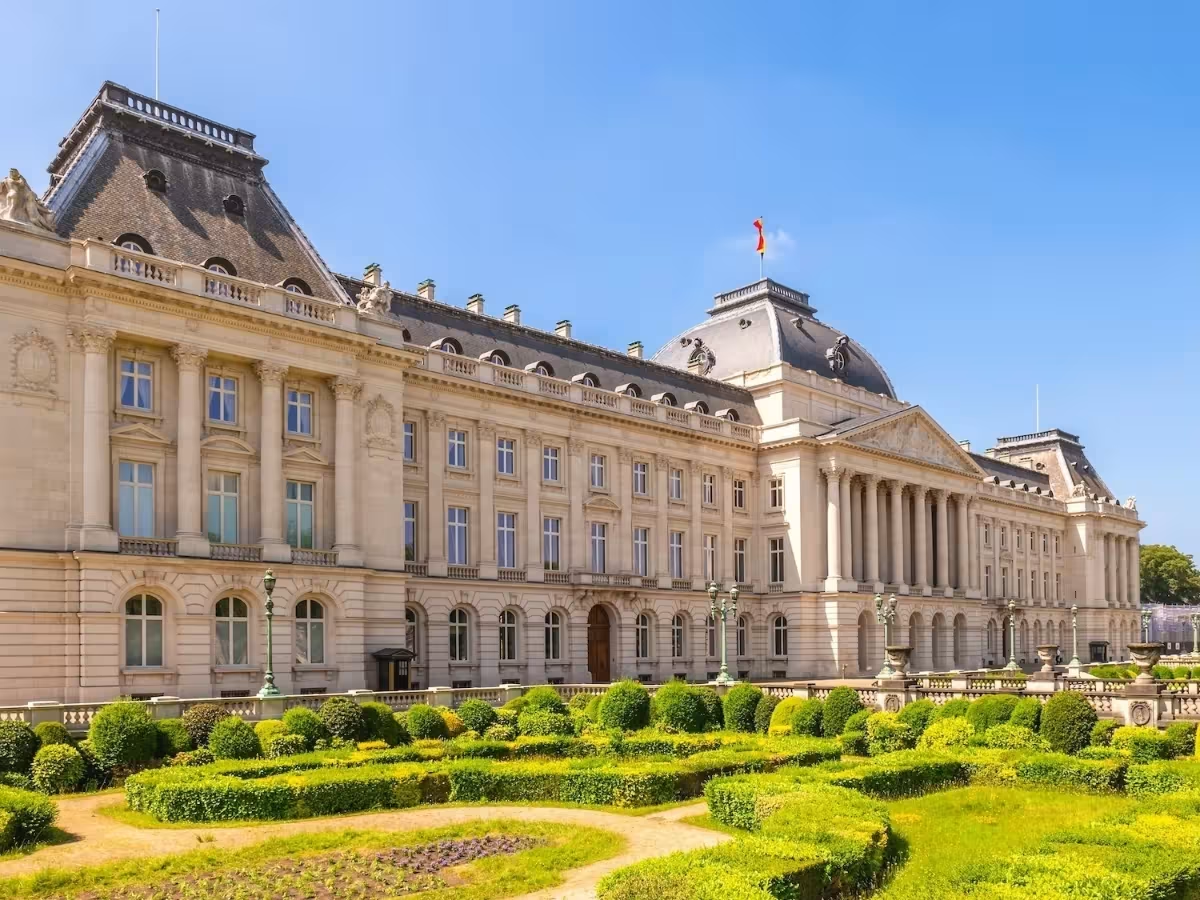
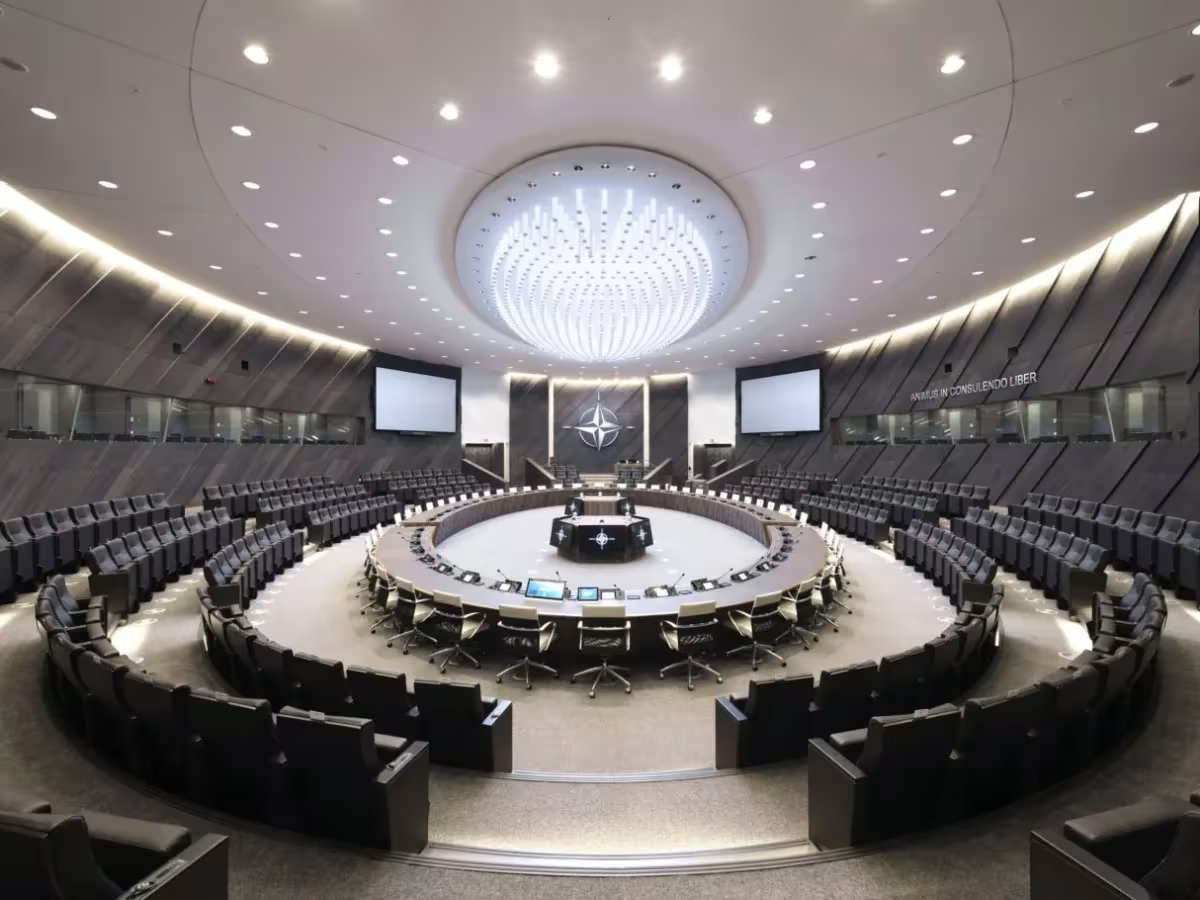
- The line runs through the Pentagon district of Brussels—a homonym of the building that houses the United States Department of Defense—without, however, touching NATO headquarters on the outskirts of the city. It also passes over the Royal Palace and the Paul-Henri Spaak building, home to the hemicycle of the European Parliament. Europe’s ruling families and the Euro-Reich created from scratch by the United States enter the conversation—but there is something even more significant still.
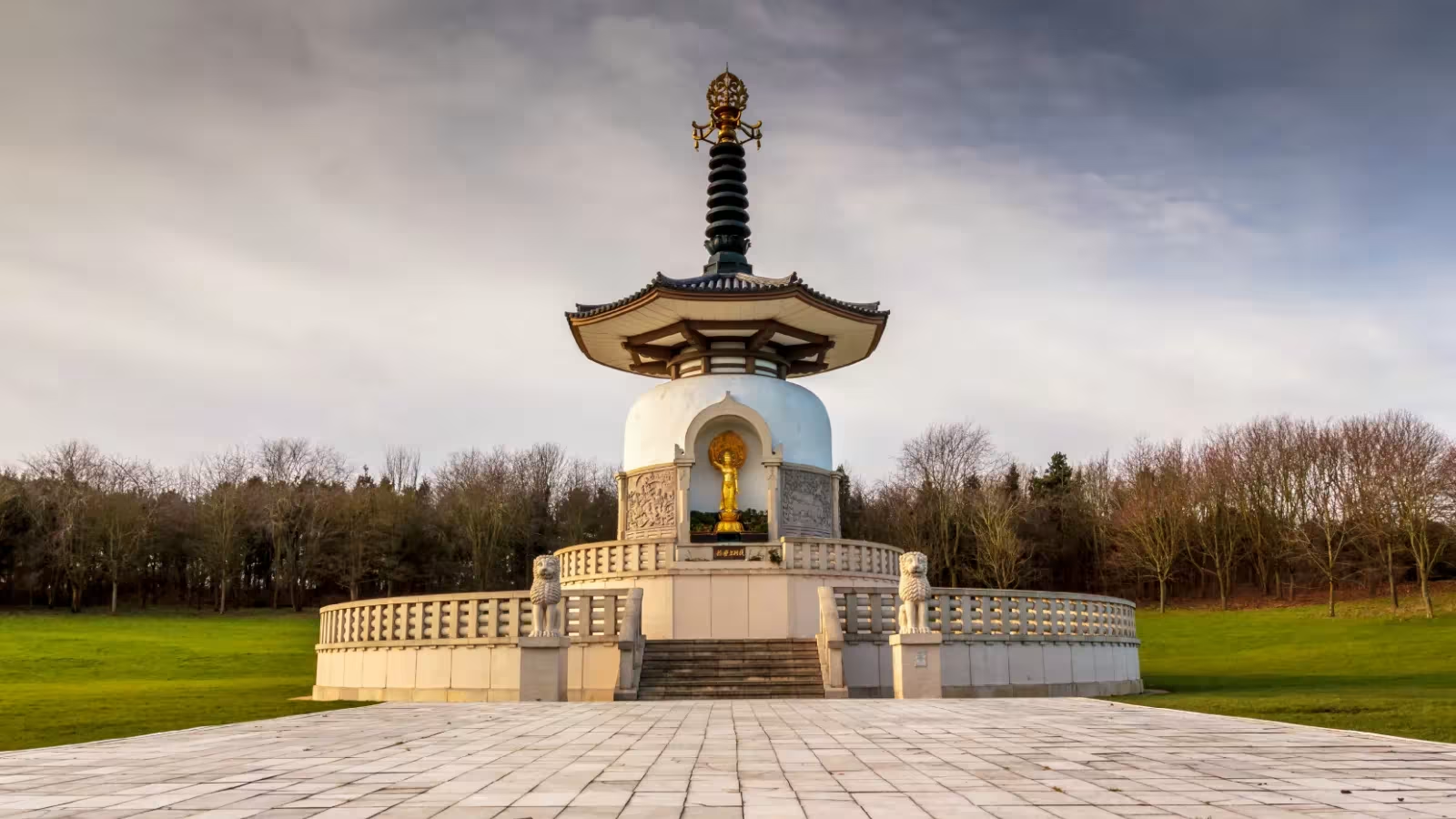
- The line passes within 50 metres of the Nipponzan-Myōhōji-Daisanga Peace Pagoda, located in Milton Keynes, United Kingdom. The first structure of its kind built in the Western Hemisphere, this pagoda stands beside the Willen Labyrinth, laid out in 1988 on a plan similar to those of Saffron Walden and Chartres Cathedral. Milton Keynes, a “new town” built in the 1970s amid a decaying United Kingdom, now presents itself as a smart city hosting numerous companies in information technology, artificial intelligence, defence, and cybersecurity. So this union of Eastern and Western spiritual traditions appears as an antidote to the darker energies of the rest of the city.
Symbolically, the Peace Pagoda—representing Japan here within the United Kingdom—thus becomes the decisive piece that enabled a Serb to checkmate the Empire. A task magnificently accomplished by John Bosnitch when he secured Bobby Fischer’s release from his Japanese prison.
Main photo: Dan Davidson, 2015.