
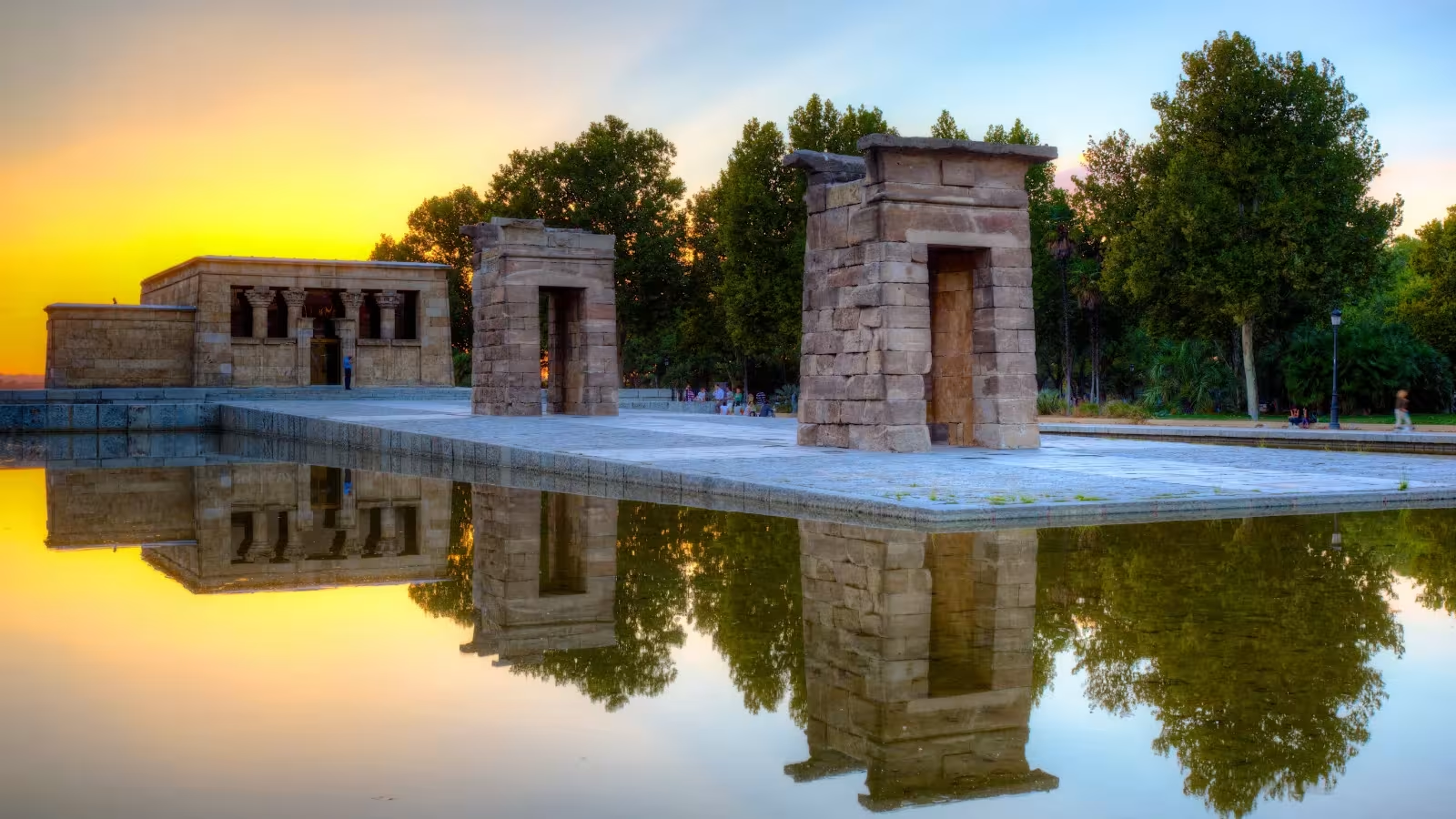
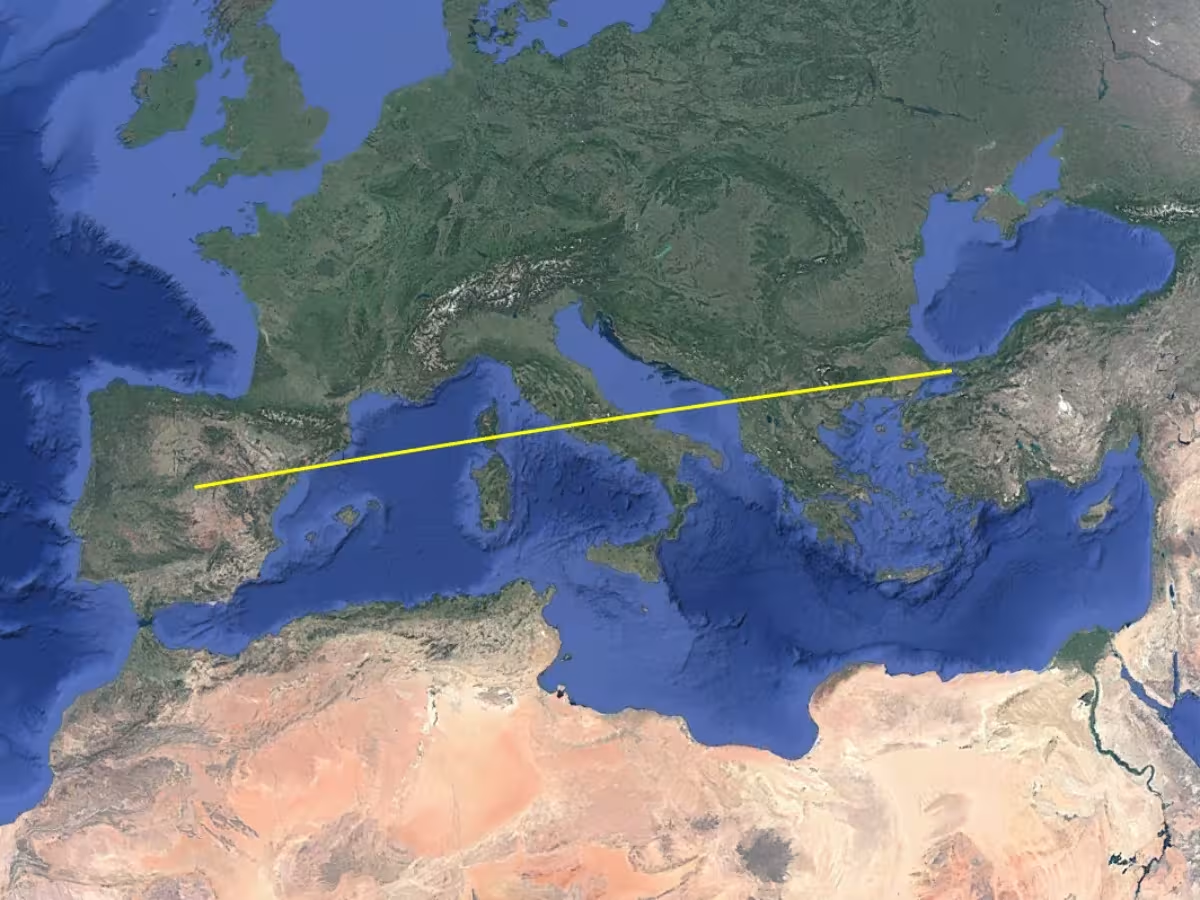
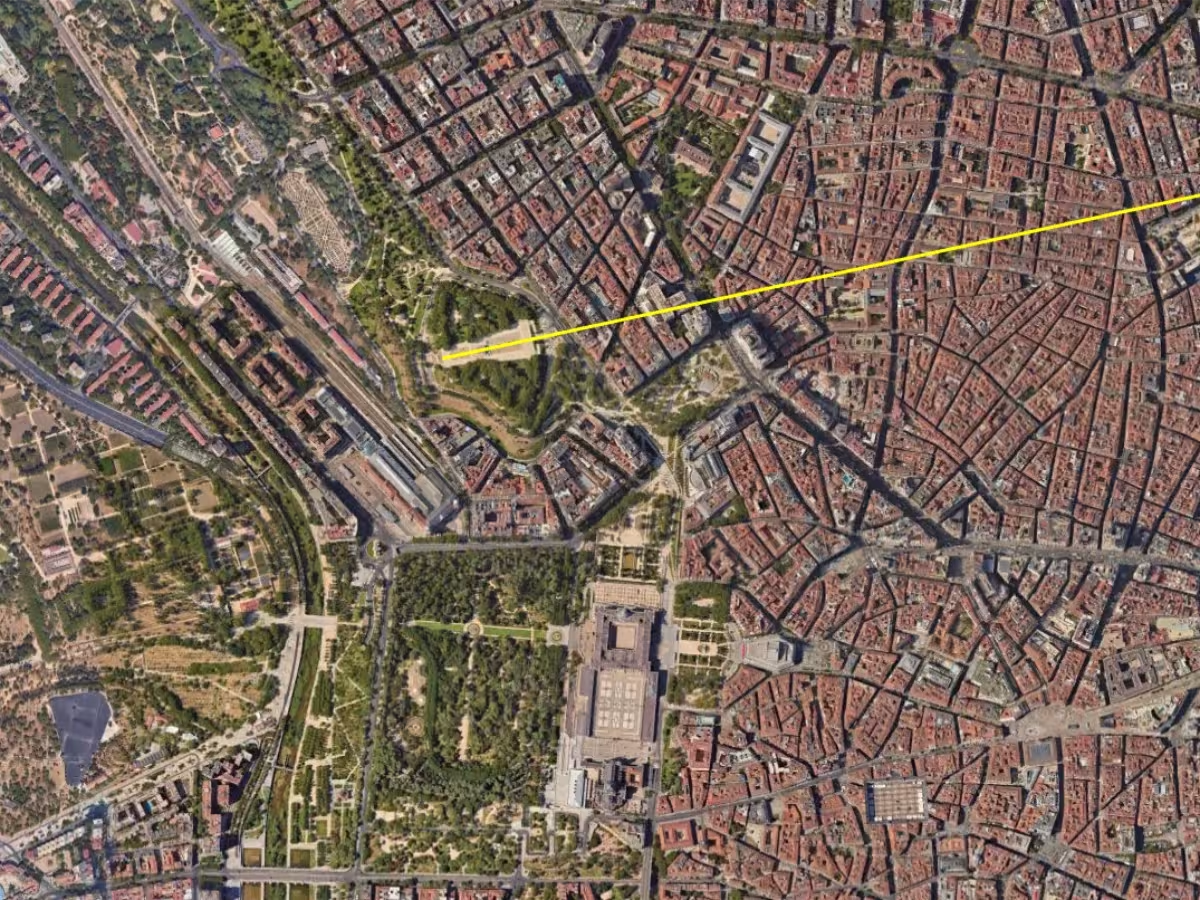
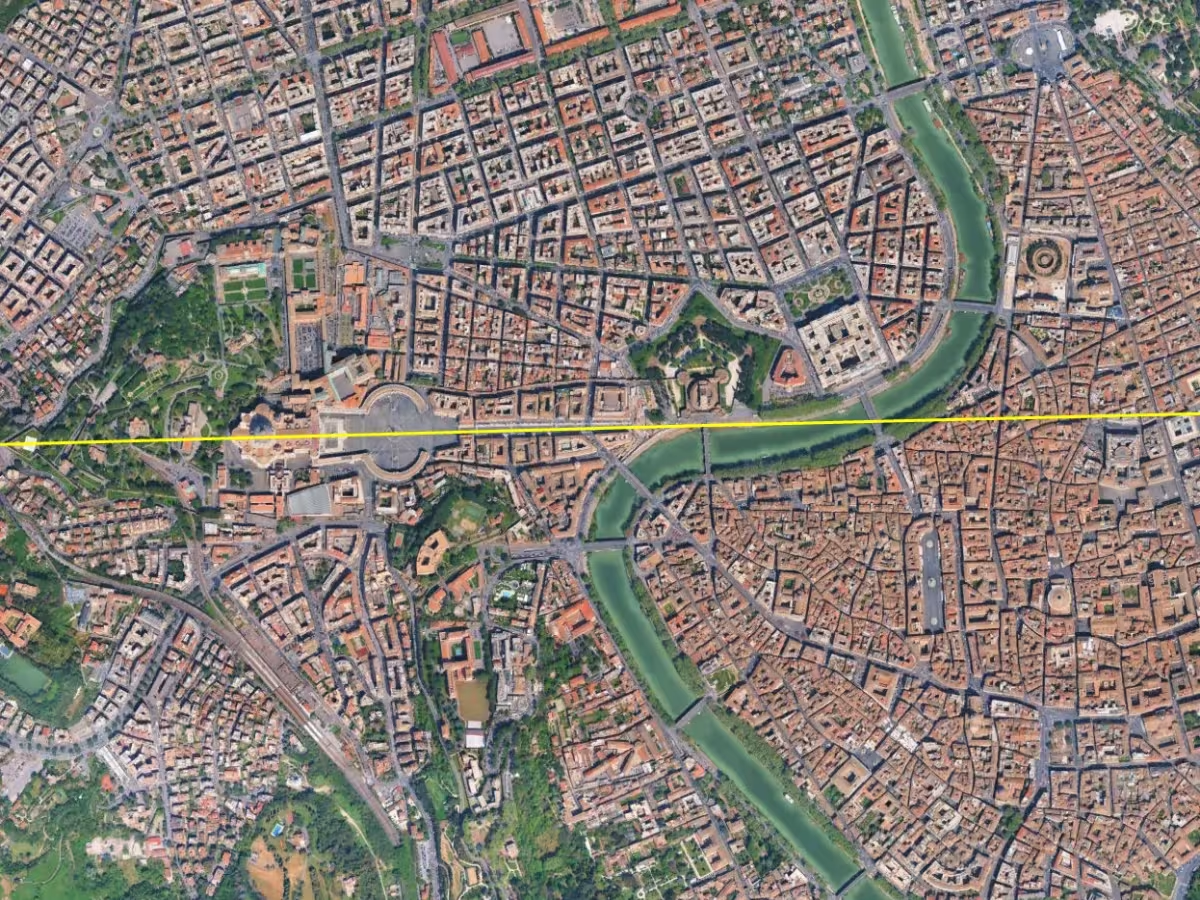
Why is an Egyptian temple rebuilt in Madrid in 1972 aligned toward the Vatican? And why is St. Peter’s Square, built in 1667, aligned toward Hagia Sophia, erected in Constantinople in 537? The perfect natural alignment between Madrid, Rome, and present-day Istanbul is remarkable in itself, but it appears that the structures mentioned above were deliberately placed in relation to one another. The researchers who identified this instance of symplanicity are Cort Lindahl, author of numerous videos on YouTube, and the Canadian Scott Onstott, in a blog post published in 2011.
A Temple’s Remarkable Journey
The Temple of Debod is an ancient sanctuary dedicated primarily to the god Amun, built in the 2nd century BCE near Aswan in southern Egypt. In the 1960s, the construction of the Aswan High Dam threatened to submerge numerous Nubian monuments beneath the waters of the future Lake Nasser. In response, UNESCO launched a major international archaeological rescue campaign in 1960. Several countries contributed financially and technically to the relocation and preservation of the endangered temples, with Spain playing a significant role in the effort.
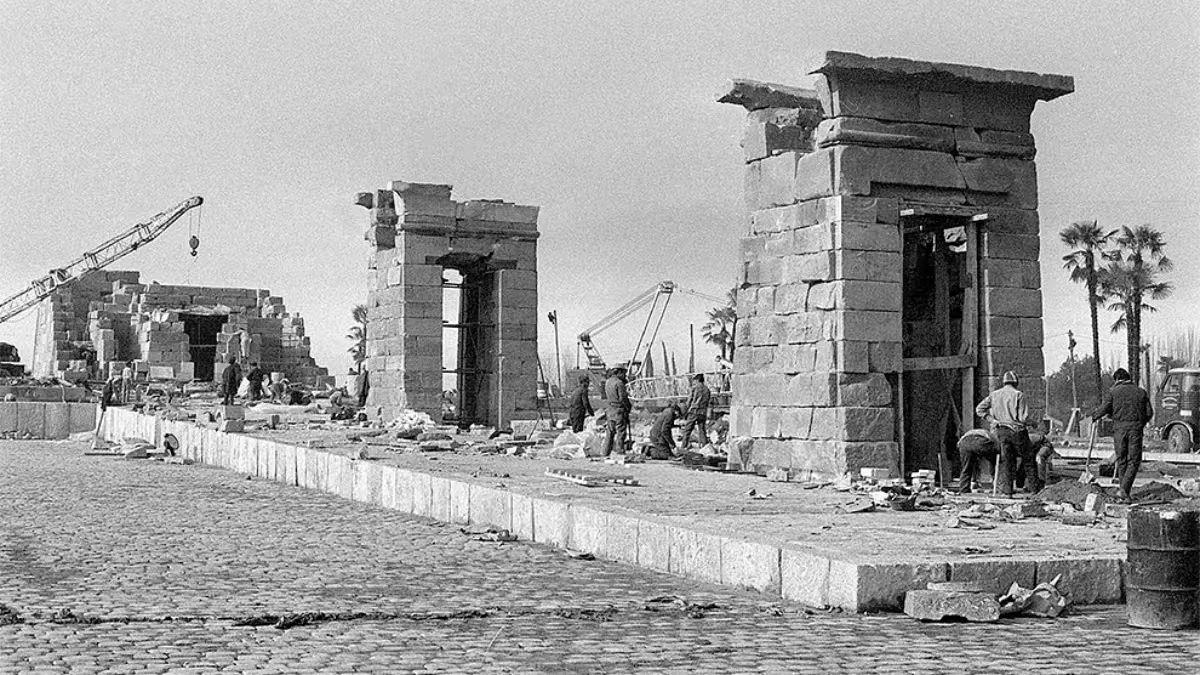
In recognition of this assistance, the Egyptian government gifted the Temple of Debod to Spain in 1968. Dismantled stone by stone, the temple was transported by ship and then by truck to Madrid, where it was reconstructed between 1970 and 1972 in the Parque del Oeste.
While the Vatican and Hagia Sophia are major centers of Christianity—at least until the latter was converted into a mosque—this alignment carries a distinctly Egyptian flavor. Extending beyond the Temple of Debod, one finds the Vatican Obelisk, transported to Rome in 37 CE and erected in its current location in 1586, as well as the Obelisk of Theodosius, erected in Constantinople in 390 CE, less than 500 meters from the dome of Hagia Sophia.
An Initiative of the Franco Regime
Incidentally, the Temple of Debod stands on a site formerly occupied by the Cuartel de la Montaña (Mountain Barracks), the scene of a major anti-Republican military uprising at the outset of the Spanish Civil War. Upon the Nationalist victory in 1939, the site became a concentration camp for Republican prisoners.
The location already carried a strong symbolic significance before the construction of the barracks. It was on this hill that some of the executions took place that inspired Francisco de Goya’s famous painting The Third of May 1808, depicting the French repression that followed the uprising of the people of Madrid.
It is possible that Francisco Franco himself played a role in the selection of the site and in the orientation of the Temple of Debod toward the Vatican. Indeed, the 1953 Concordat between Spain and the Holy See greatly contributed to legitimizing a government that had remained politically isolated on the international stage since the end of the Second World War. It was likely an alliance Franco wished to honor, even though Pope Paul VI maintained a more distant relationship with Spain than his predecessor, Pius XII.
The Temple of Debod was ultimately inaugurated on July 20, 1972, exactly thirty-six years after Republican forces seized the Cuartel de la Montaña, in what was the first major confrontation of the Spanish Civil War.
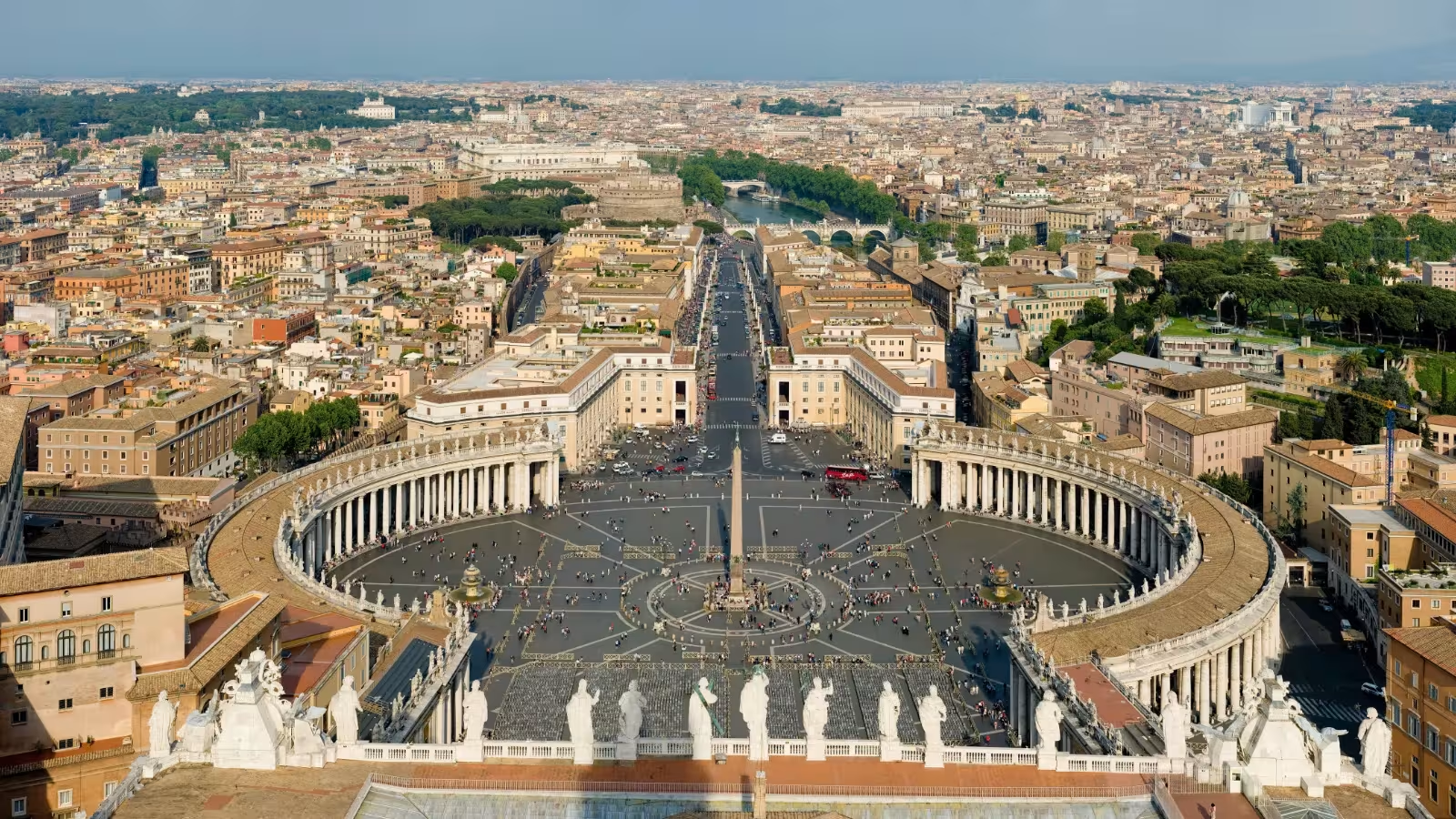
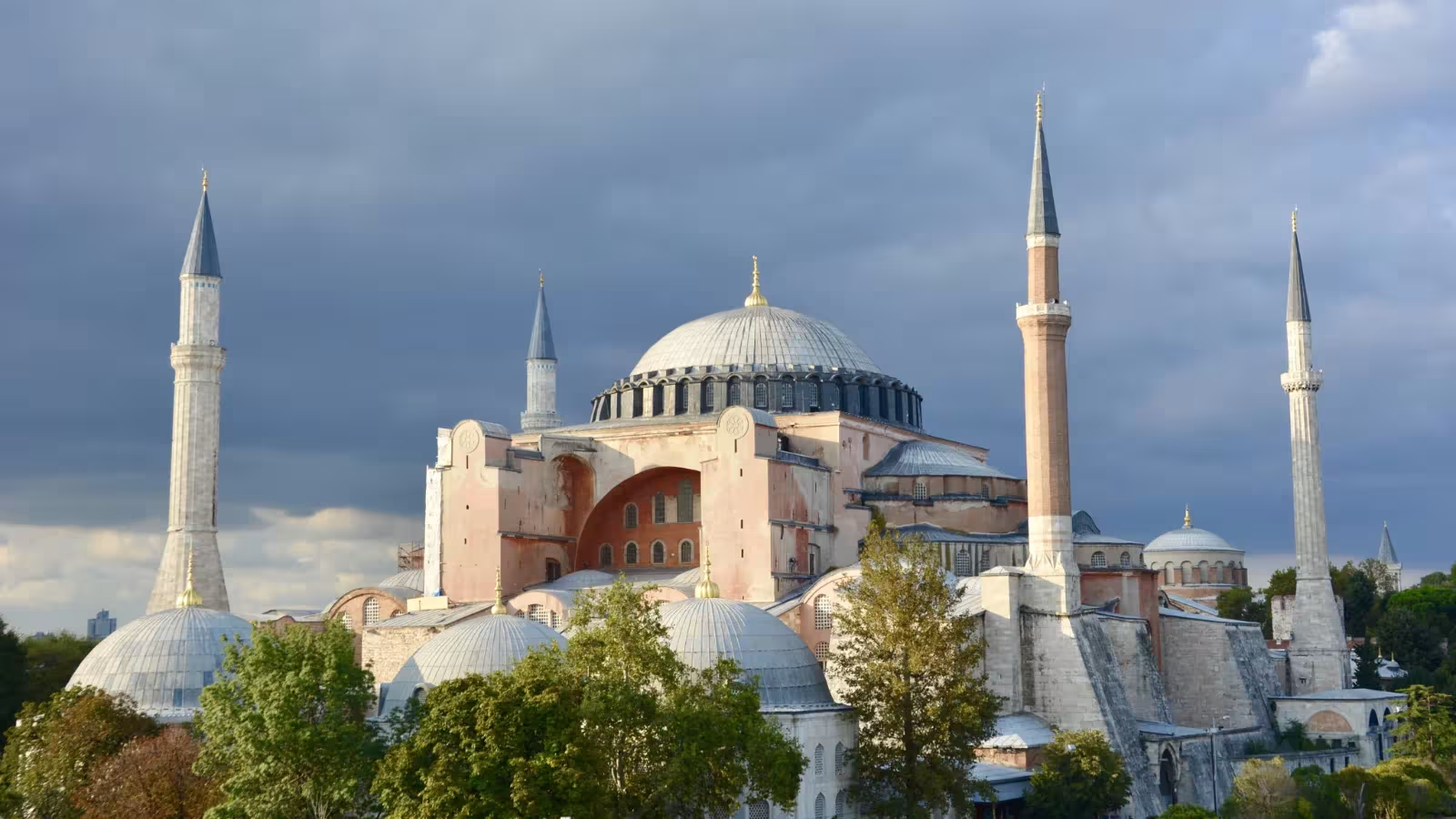
Yet this political convergence between the Franco regime and the Vatican does not explain why the axis of St. Peter’s Square is perfectly aligned with Hagia Sophia, already under Ottoman control when construction of the present basilica began in 1506. The existence of this alignment likely dates back to the Old St. Peter’s Basilica, whose construction began in 318 during the reign of Emperor Constantine and which shared a similar orientation toward Constantinople, designated the new capital of the Roman Empire on May 11, 330.
Refining the Alignment with AI
Lindahl and Onstott's discovery dates back to 2011 and was based on manually drawn lines. For this reason, I sought even greater precision and had a direct line plotted between Madrid and Istanbul using artificial intelligence. By placing the endpoint on the Obelisk of Theodosius, we obtain equally intriguing correspondences. The axis crosses the Circus Maximus before reaching its eastern counterpart, the Hippodrome of Constantinople, the true civic and ceremonial center of the city. It also passes through the Archbasilica of St. John Lateran, one of Rome’s four major basilicas and the first monumental Christian building constructed in the West, beginning in 320.
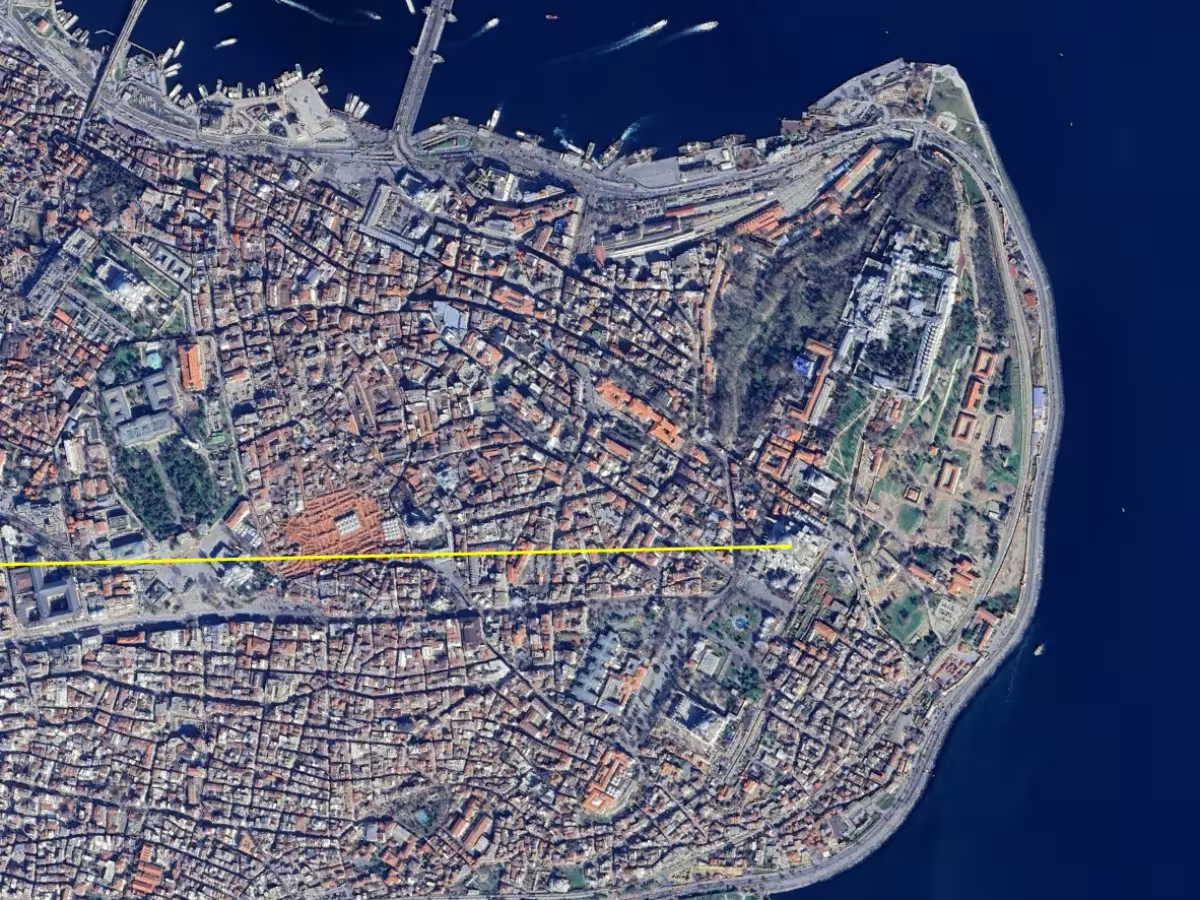
The Google Earth images above show the alignment as originally identified by Lindahl and Onstott. The map below presents the recalculated line.
Main photo: Jiuguang Wang, 2012, CC BY-SA 2.0.